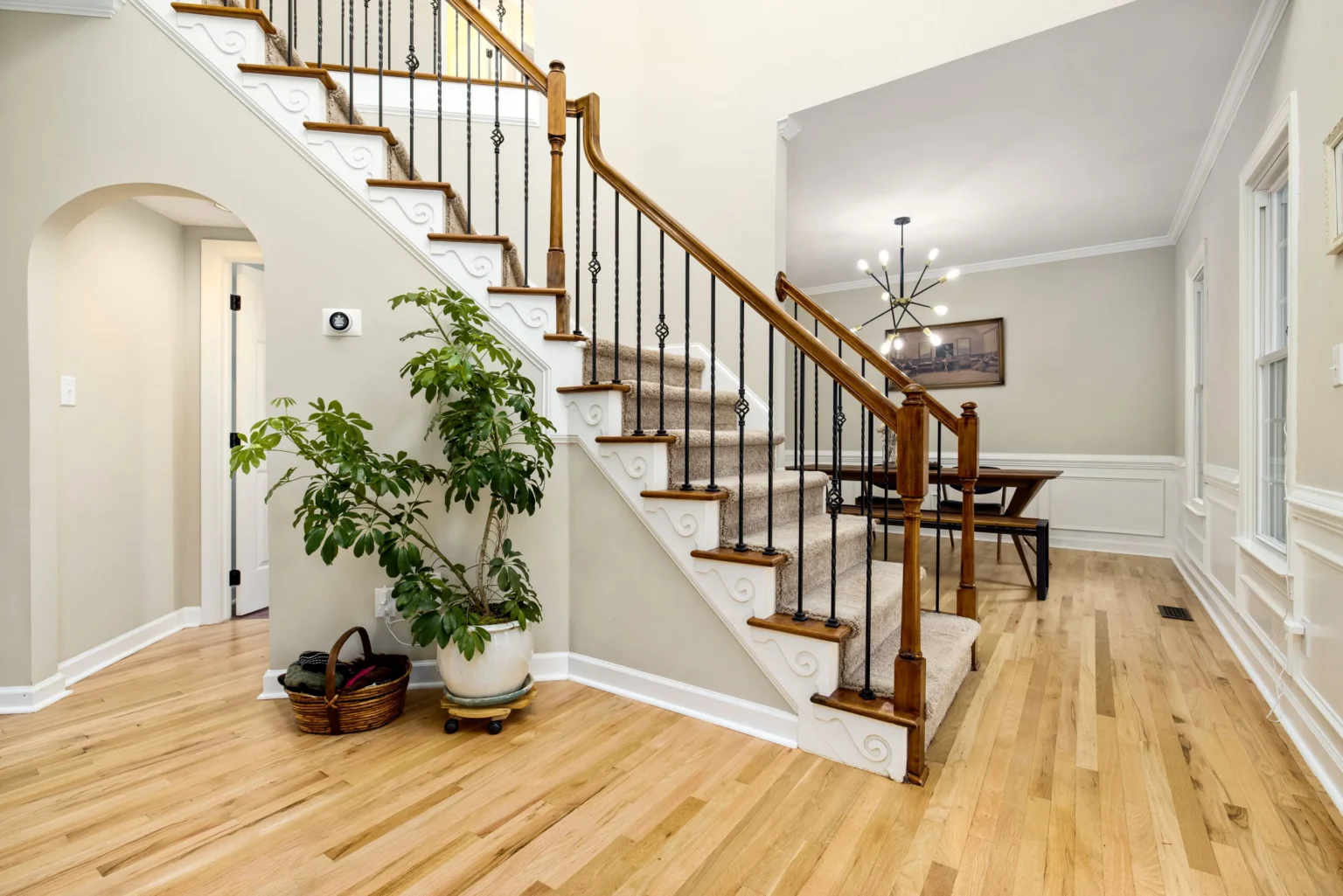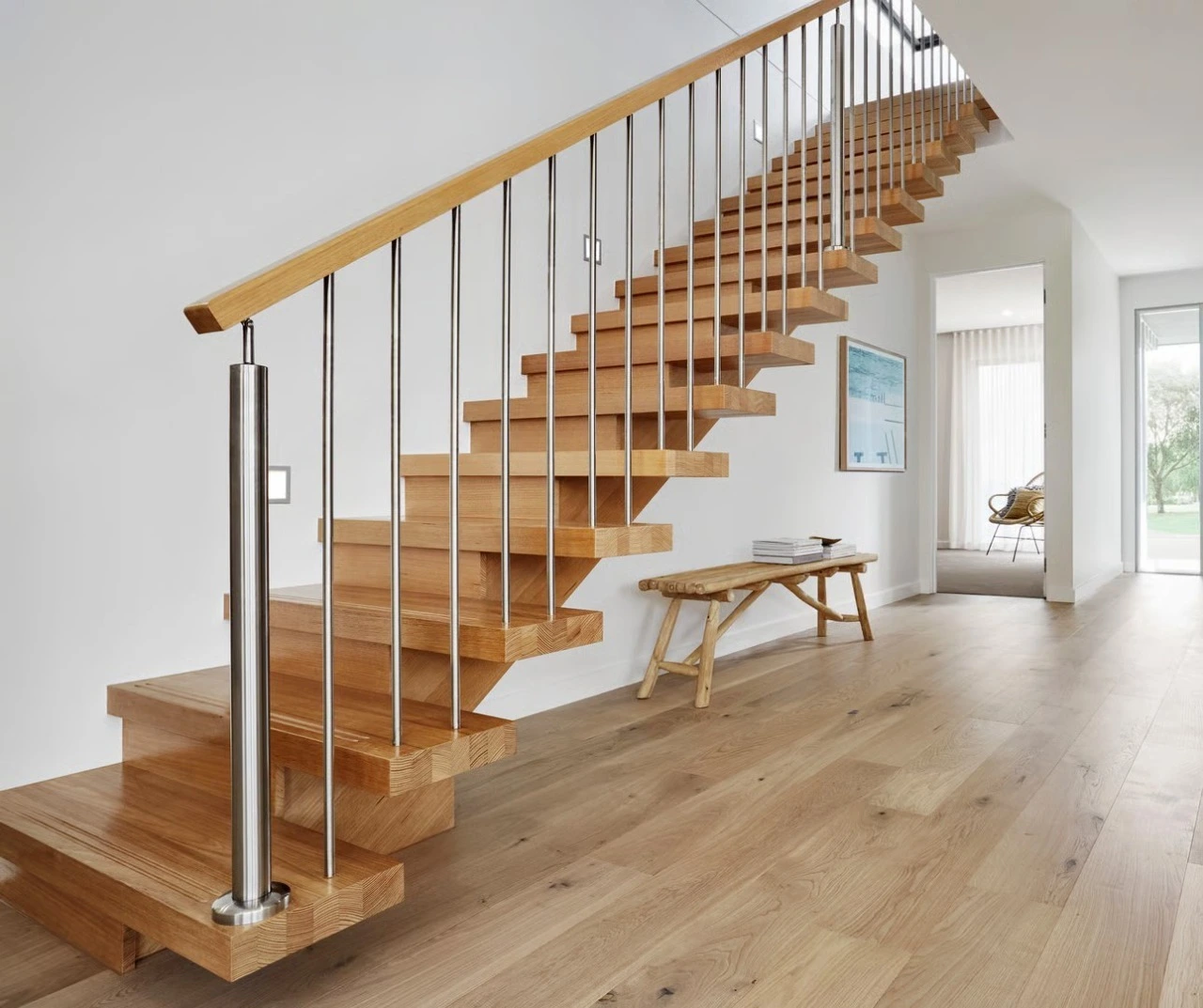
Machined for your cage
Each step is calibrated for the stairwell opening measured on site, nothing is assembled in series or taken from stock.
A Butcher Block staircase receives thick treads carved from hardwood blocks laminated and glued on the edge — the process of the butcher’s counter, transposed to the walk.
Survey, manufacture in the workshop, installation and finishing by our team
« The team took the measurements themselves, delivered exactly on schedule and the installation was flawless. No surprises. »
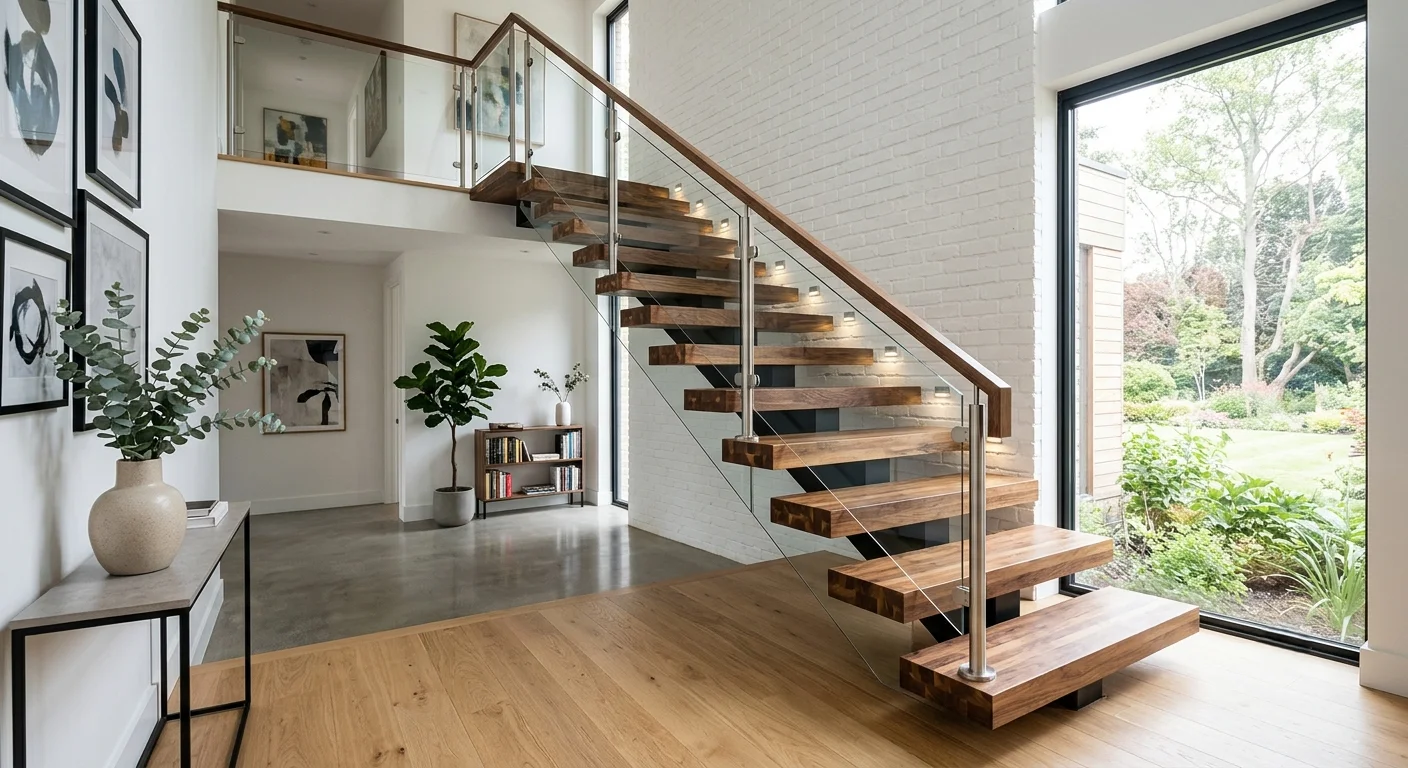
A Butcher Block step is not cut from a single piece of wood, but is assembled from hardwood slats glued on the edge, then erected and calibrated into a single piece. The succession of parallel veins over the entire width of the step is the signature of the process.
This way of assembling solves a problem that the solid board does not solve. After a certain thickness, a step cut in a single piece works: it tiles, it veils, it eventually splits. By alternating the direction of the slats, the glued block distributes the stresses and remains flat — this is what allows two to three inches thick treads to be mounted without riser.
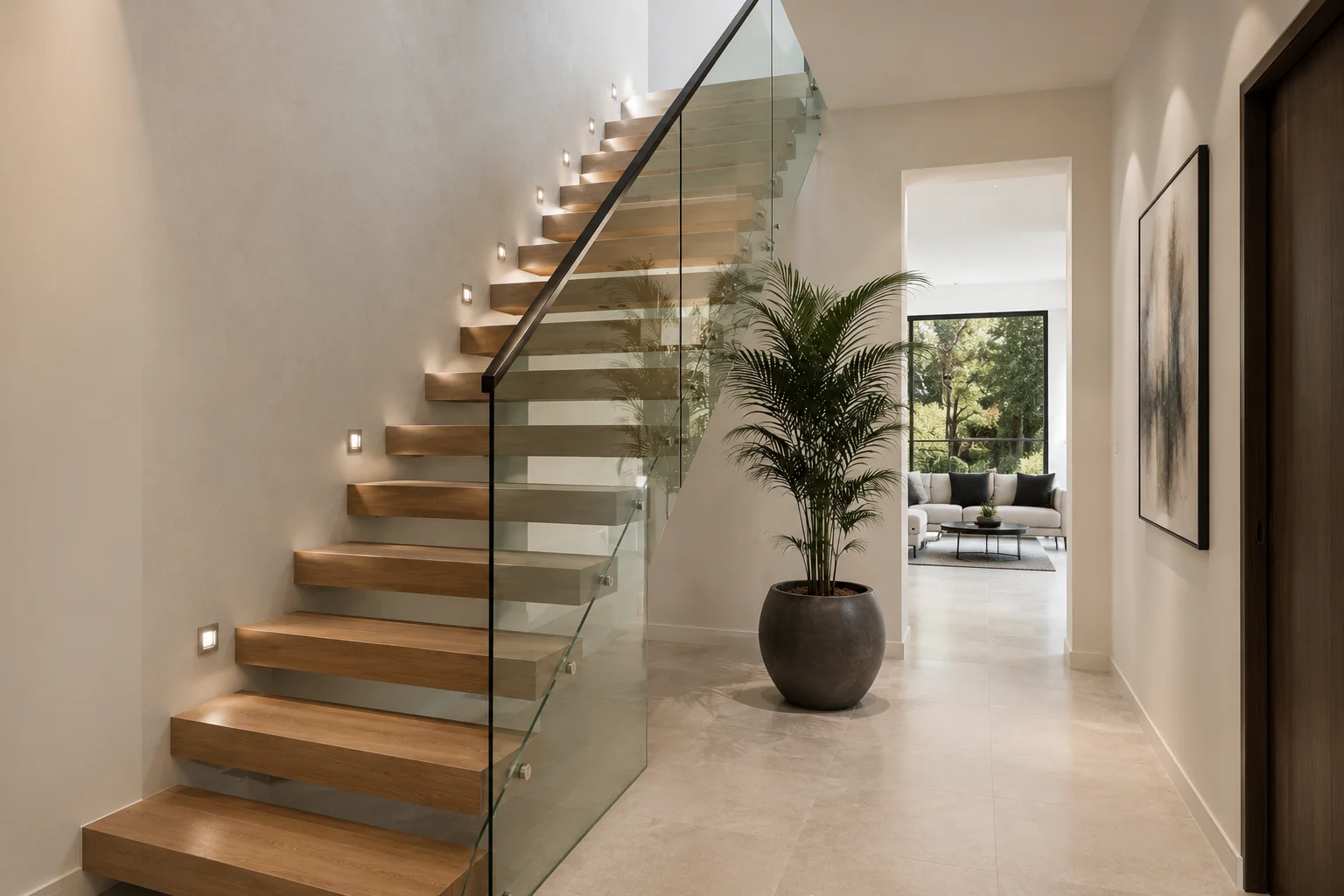
The white maple and oak are the two species we use most for this type of walk: dense, with a regular grain, they absorb the passage and keep a stable hue.The black walnut gives a darker block, with a marked contrast between the slats.
The finish is more important here than on a thin step. hardwood exchanges moisture with the workpiece: it swells in summer, it withdraws in winter. A block sealed on its six faces moves little, and in a homogeneous way. We apply the finish in the workshop, before the installation, so that the bottom and support edges are treated as the visible faces.
This is what separates a staircase step from an oiled countertop: once sealed, it does not require seasonal maintenance.
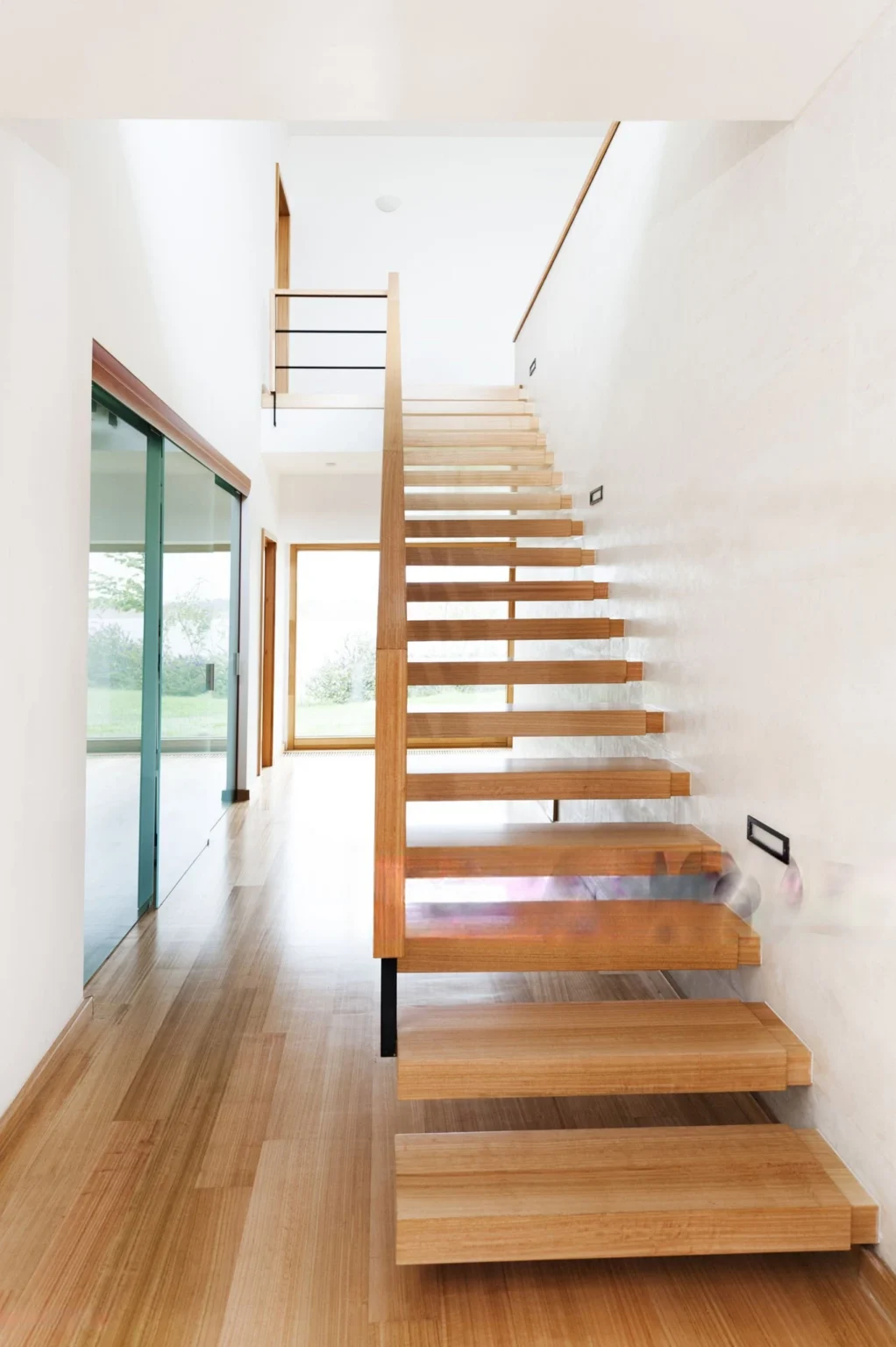
The thicker the tread, the more the smallest gap is visible and felt under the foot, which is why we work this way — and the four photos below are from our construction sites and our workshop.
Each step is calibrated for the stairwell opening measured on site, nothing is assembled in series or taken from stock.
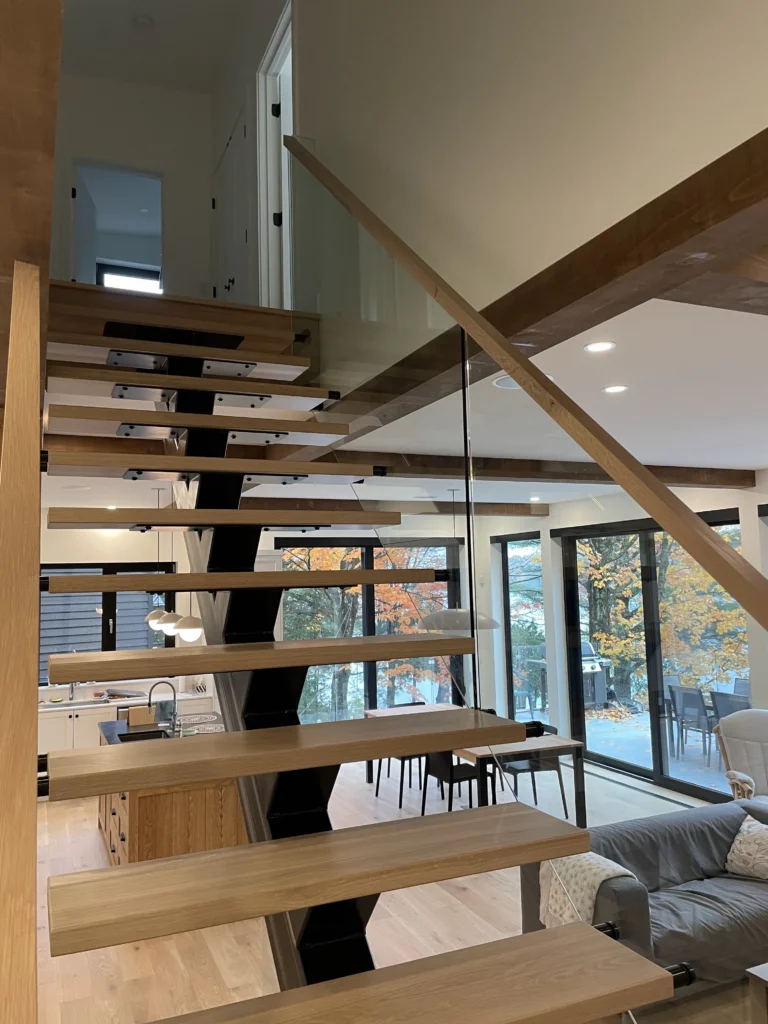
The finish is applied in the workshop, before installation: the bottom and support edges are treated as the visible faces.
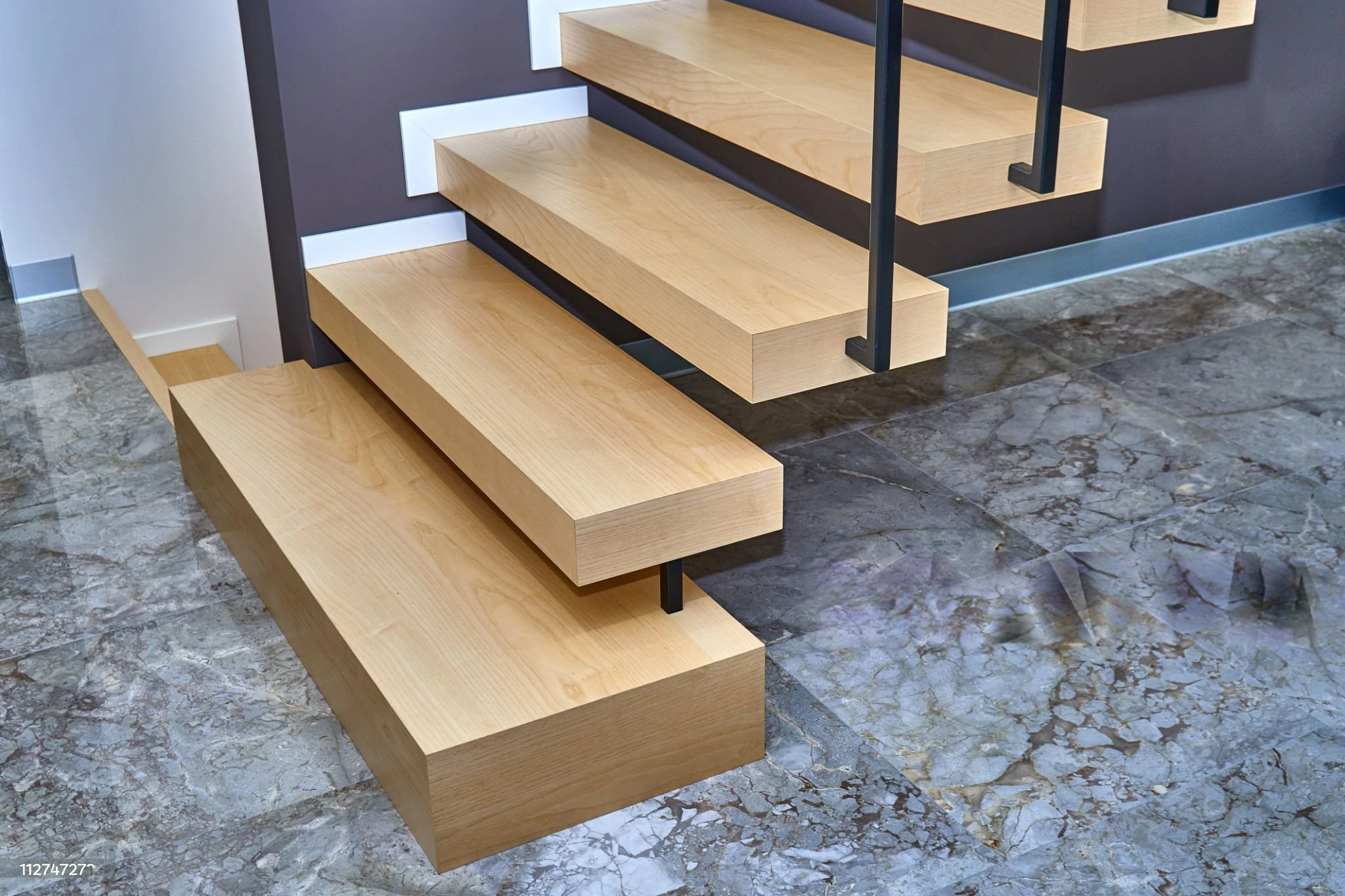
The way you attach it — cantilever, stringer steel or stringers wood — is decided with the thickness, not afterwards.
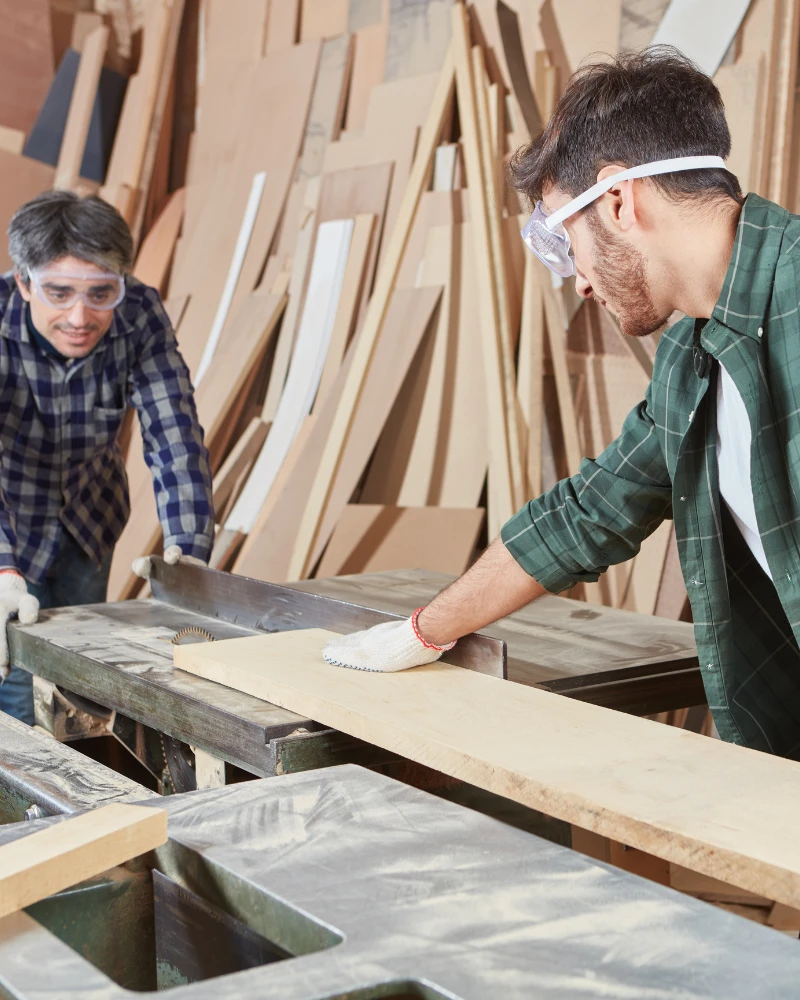
We do not subcontract the manufacturing or installation, the company that measures is the one that manufactures and installs.
Twenty-three of our Projects carry massive treads of this type, in oak, in maple or in hardwood stained. Our Workshop.
The assembly process is the same — hardwood slats glued on the edge — but the use changes everything. A step is calibrated to carry a load and receive an stair nosing, it is sealed on its six sides and is not intended to come into contact with food, while a counter is finished with cooking oil and is fed several times a year.
Between two and three inches in most cases. Below two inches, the mass effect disappears and the walk loses the visual grip that is sought. Beyond three, the weight becomes a challenge for the fixation, especially in cantilevered positions.
All hardwood moves with the humidity of the environment. The edge bonding, by alternating the direction of the slats, distributes these stresses rather than concentrating them: the block remains flat where a solid board of the same thickness would tile.
The white oak and the maple are the hardest of the hardwoods we work, and the most suitable for a very past walk. The black walnut is softer, but darker. our stairs in hardwood and our stairs in oak.
The Butcher Block is a walking construction, not a path: it can be laid on a Straight Staircase only on one Winder Staircase. The treads corners are simply cut into a wider block.
Discover also our staircase types, but Railings and Handrails and nos Projects, or request a quote.