Design
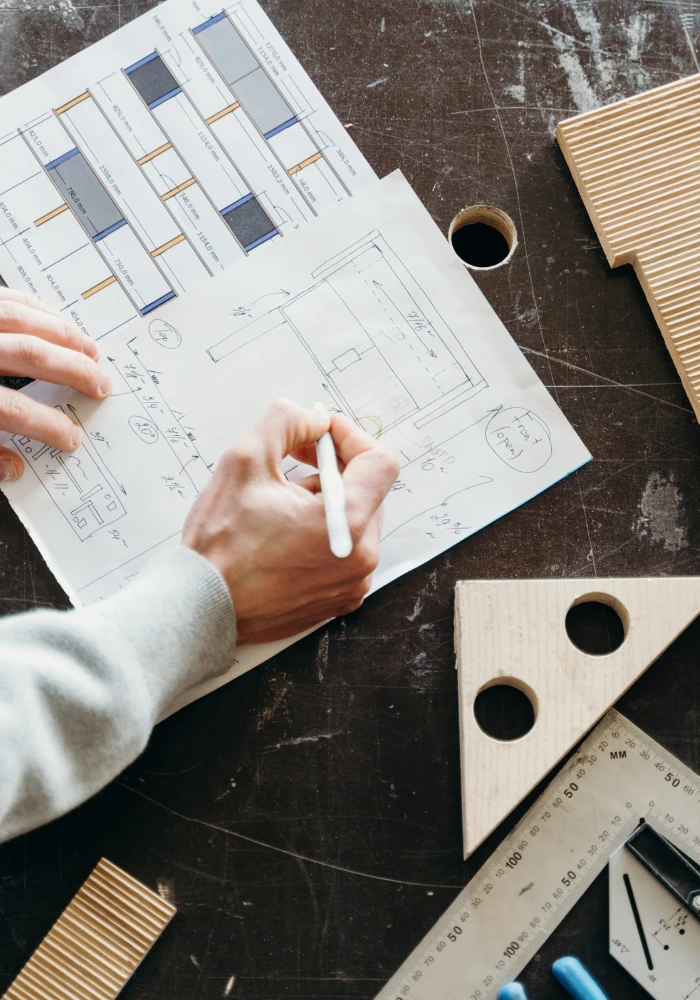
We measure your space, define the stair layout, and select the wood species and railing. Every detail is approved before the first component is cut.
Tempered glass panels replace the balusters, which are held by steel posts, clamps or a profile recessed into the step — and a handrail of hardwood can land on top.
Montérégie · South Shore · Montreal · Estrie
« The team took the measurements themselves, delivered exactly on schedule and the installation was flawless. No surprises. »
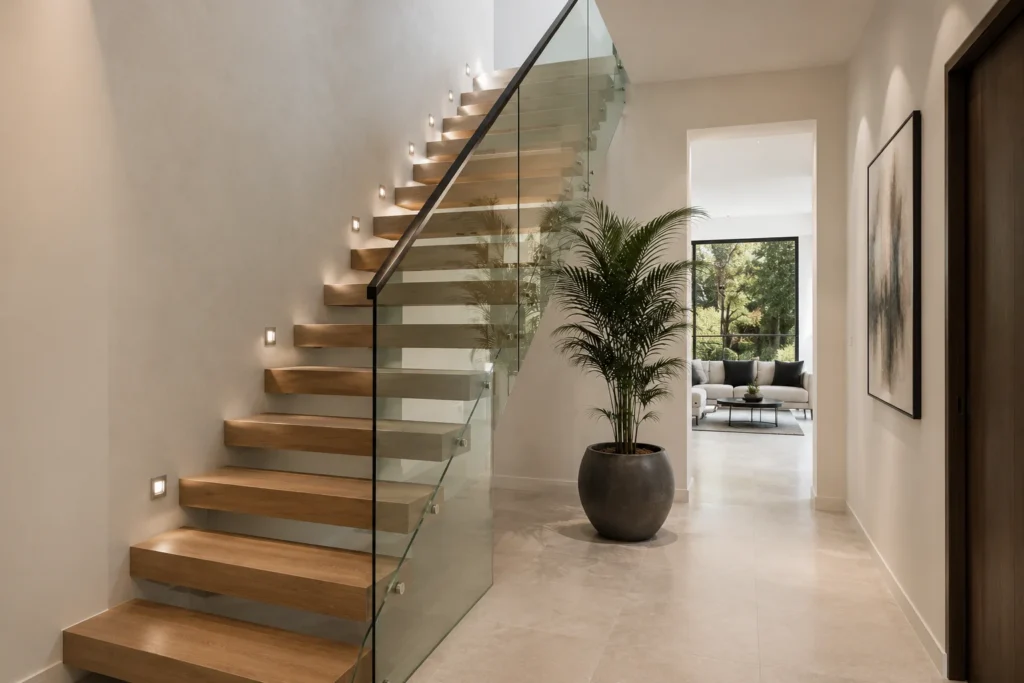
In a traditional railing, the balusters fill the gap between the high slate and the step, and the glass takes their place: a continuous panel, held at regular intervals rather than every ten centimeters. The handrail, however, does not change its role — it is always the only piece that the hand grasps as it climbs, and it remains almost always in hardwood in our house.
The gain is not only visual. In a narrow cage or staircase with a window, a railing filled with balusters cuts the light into slices.The glass lets it through a block, and the room behind the stairs remains visible from the foot of the flight.
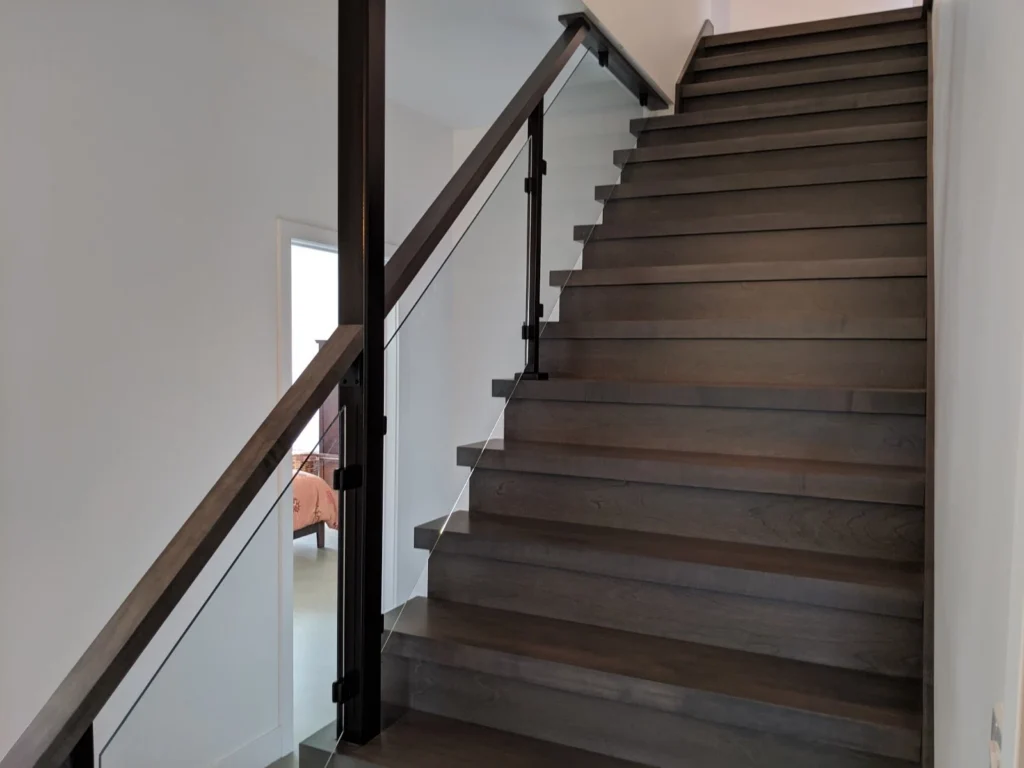
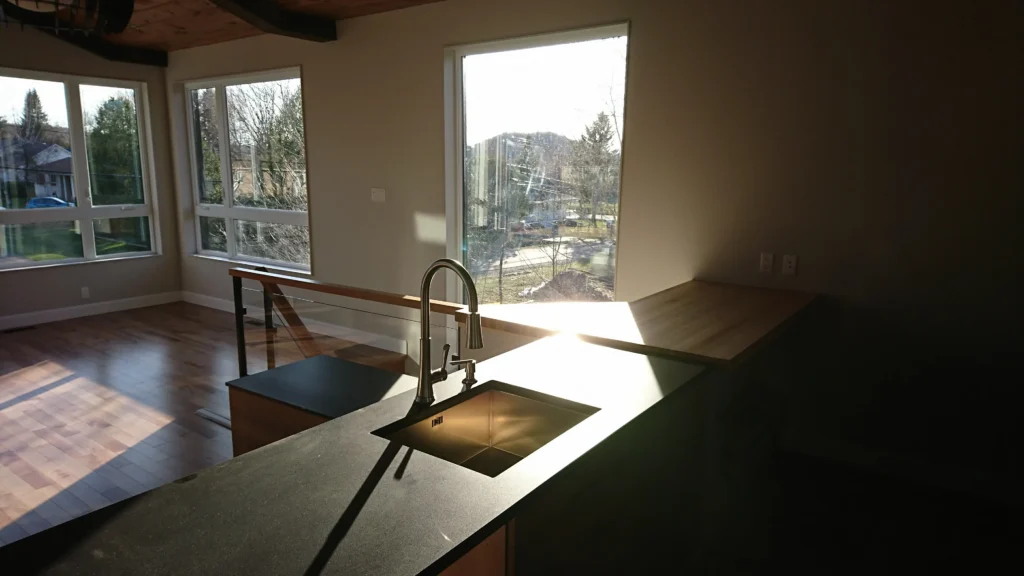
Poles and clamps. Steel poles, usually matt black, are fixed in the stringer or step; the glass is clamped.This is the most common, most tolerant to on-site adjustments and least costly of the three.
Recessed profile. An aluminum profile is drowned in the stair nosing or the frame of the landing, and the glass is stuck in it without visible hardware. The clearest result, but the profile housing must be planned at the time of the staircase manufacturing — not afterwards.
Glass with holes. The panels are drilled in the workshop and bolted directly, without high smoothness.The drawing is minimal, but everything is played at the manufacture: a drilling is done before the quenching, never after.
The glass of a railing is always tempered. In case of breakage, it will break into small shards rather than sheets — that is the difference that matters in a staircase. The thickness is not chosen in the catalogue: it is calculated according to the span between supports and the method of fixation chosen. The height of the railing and the strength of the fixations are set by the Quebec Building Code, and we respect them without exception.
The panels are ordered to the dimensions measured at your home. Tempered glass does not cross on the site. For this reason, the measurement is made after the staircase is laid, never on the plane alone.
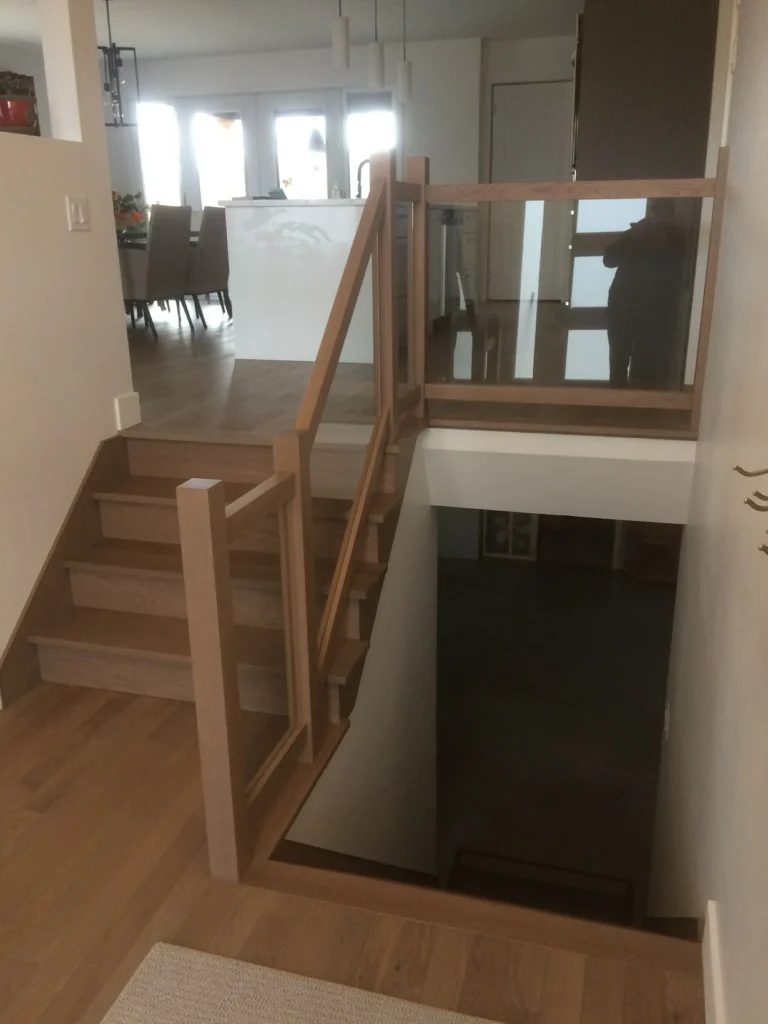
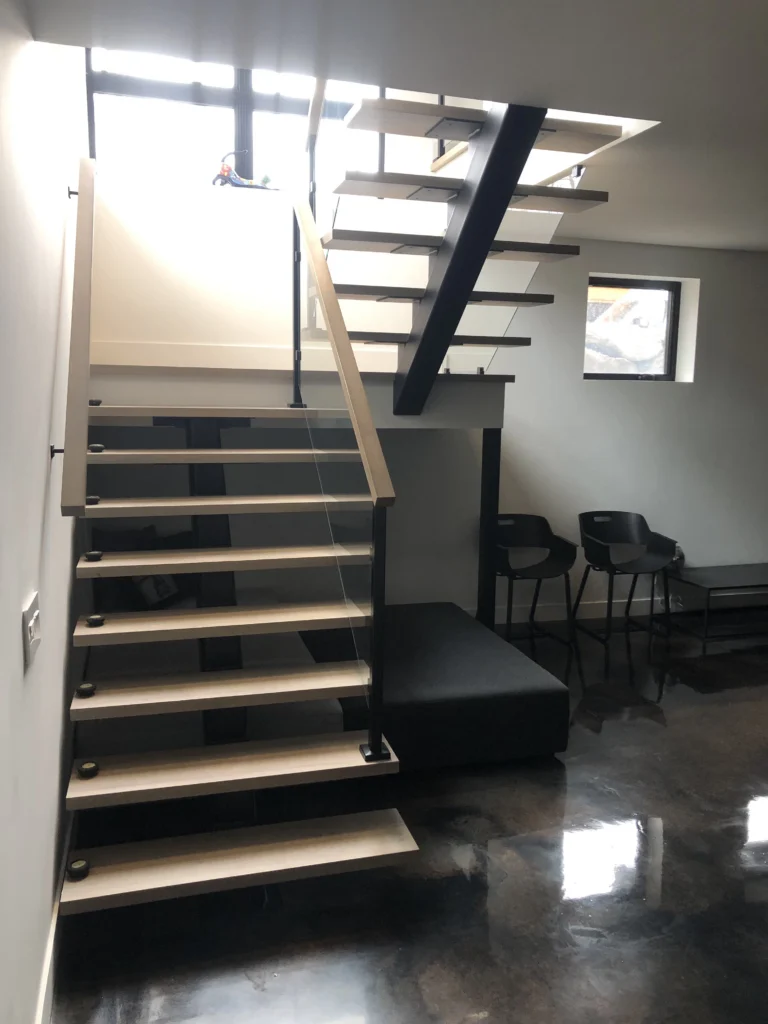
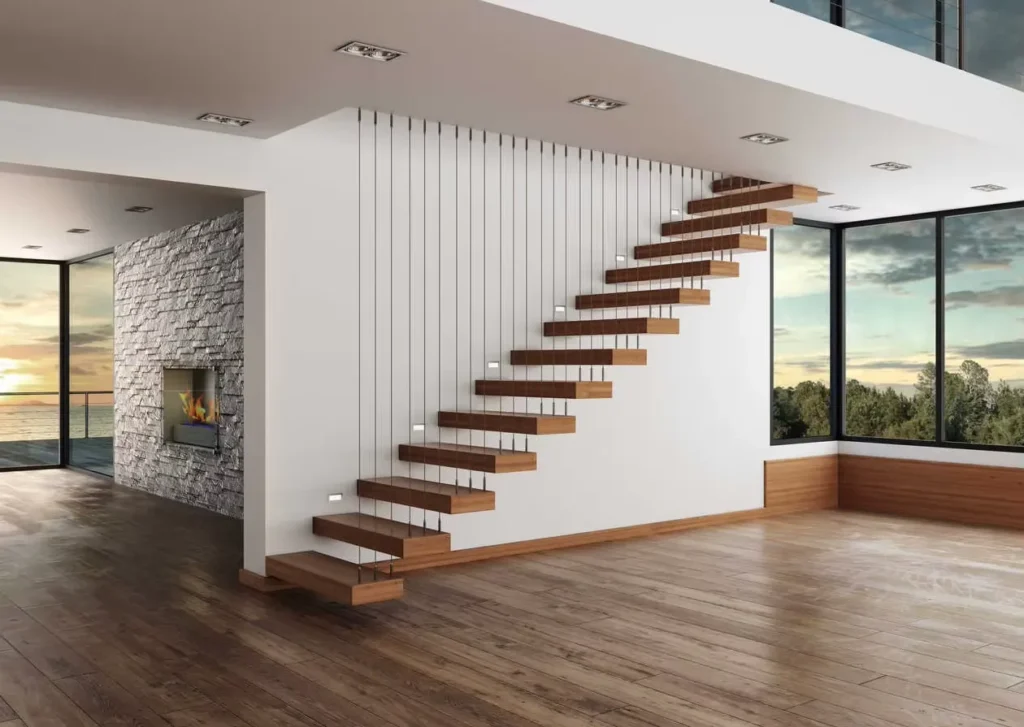
Glass shows everything: fingerprints, dust, and the underside of the treads. In a house with young children or a dog, it requires a regular wipe — a mild soap and microfiber cloth is enough, never abrasive.If this maintenance is a burden on you, vertical stainless steel cables or treads balusters to wrought iron give transparency without the same requirement.
Glass also doesn't go well with a frankly traditional interior: on a classic staircase to Closed risers and mouldings, it creates a gap in vocabulary that few pieces absorb.It is, however, the natural companion of themodern staircase and thecentral-stringer staircase.
Generally yes, and the difference is mainly due to the hardware and the way of fixing rather than the glass itself. A post and clamp installation is close to a well-executed railing of hardwood; a recessed profile or perforated glass is clearly above.
Often, yes — if the treads or stringer can be anchored and the structure is healthy. The post mounting is suitable for this. The recessed profile, on the other hand, requires a machined housing in the stair nosing: on an existing staircase, this means remaking the treads. the renovation of stairs.
No. The glass closes the void; the handrail The hand is still the piece that the hand seize, and it remains required. It comes to rest on the high smooth of the railing, or run along the opposite wall.
Tempered glass does not turn yellow, and scratches are rare in a residential staircase: scratches are almost always caused by abrasives or scrapers, not by use. A mild soap and microfiber cloth are enough, and the steel hardware will tighten if necessary after a few years.
We do not subcontract manufacturing or installation. The same team measures, builds and installs your staircase, allowing us to resolve on-site conditions that no drawing can fully anticipate.
We measure your space, define the stair layout, and select the wood species and railing. Every detail is approved before the first component is cut.
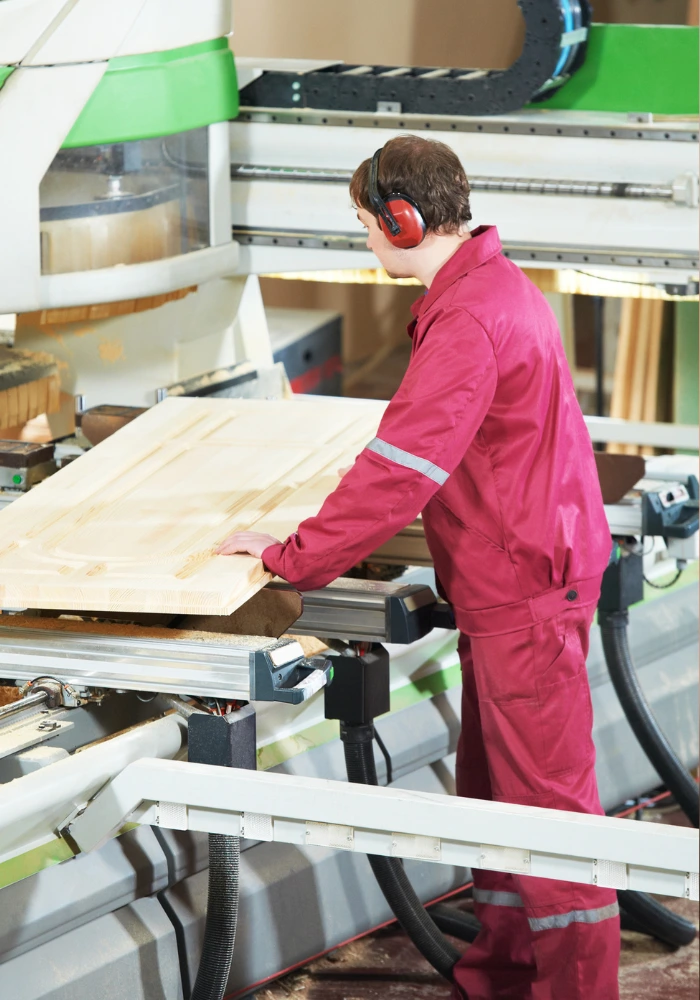
Each hardwood staircase is machined in our workshop for its specific opening. Nothing is mass-produced or pulled from stock.
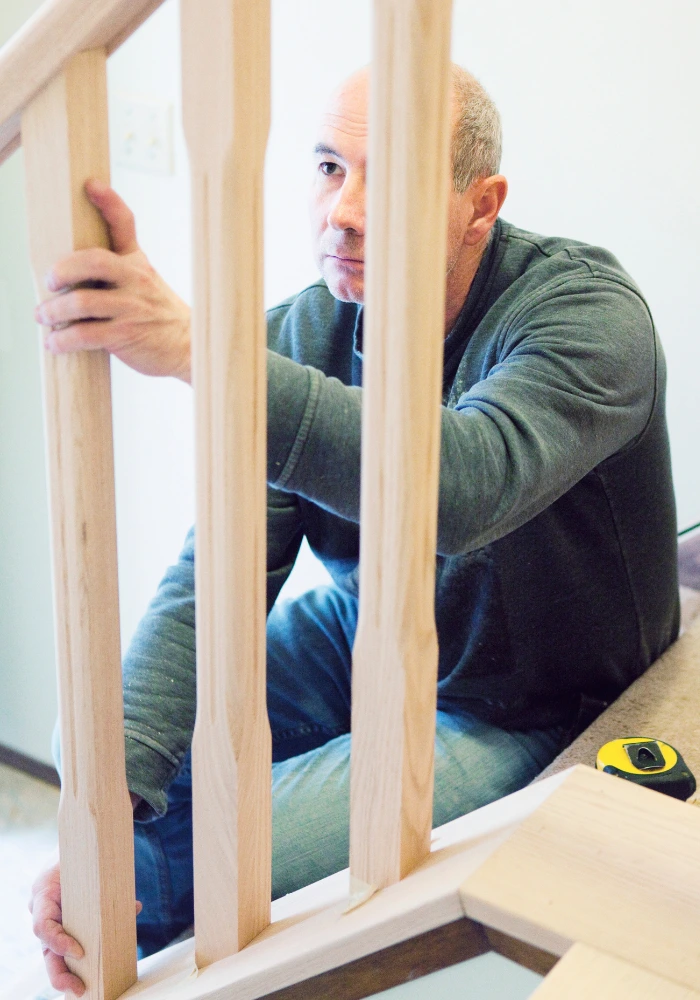
Our own team completes installation in one to three days, making final adjustments to the actual stair opening rather than relying only on drawings.
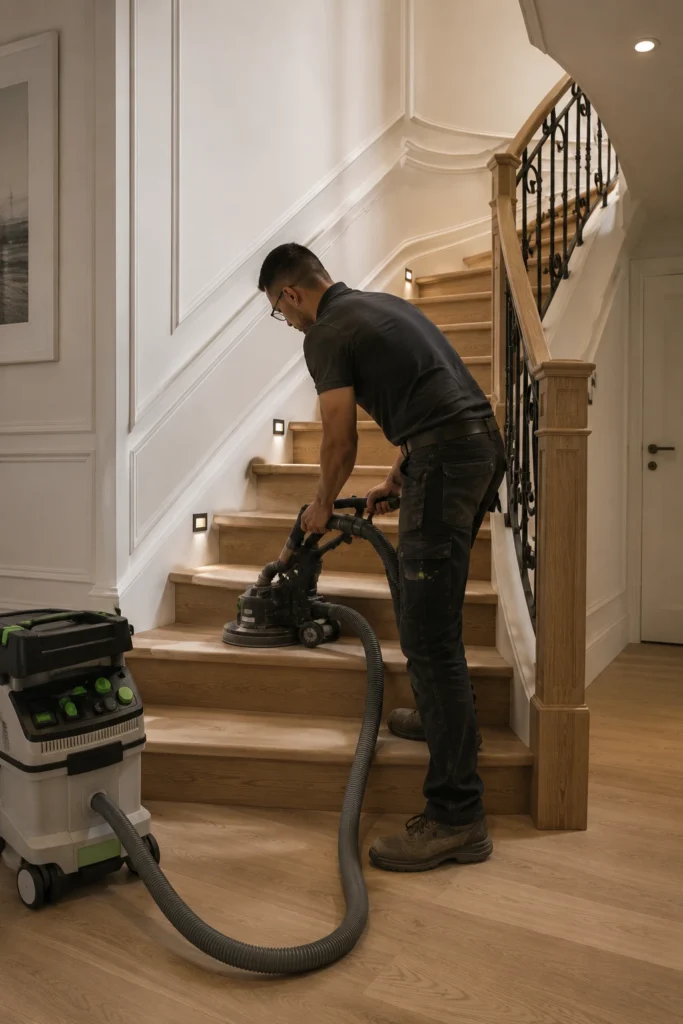
Straight, winder or spiral; classic or modern — measured on site, built in our workshop and installed by our team.
Each project lists its layout, wood species and city. Find an example close to your space, then tell us what inspires you.
VIEW ALL PROJECTS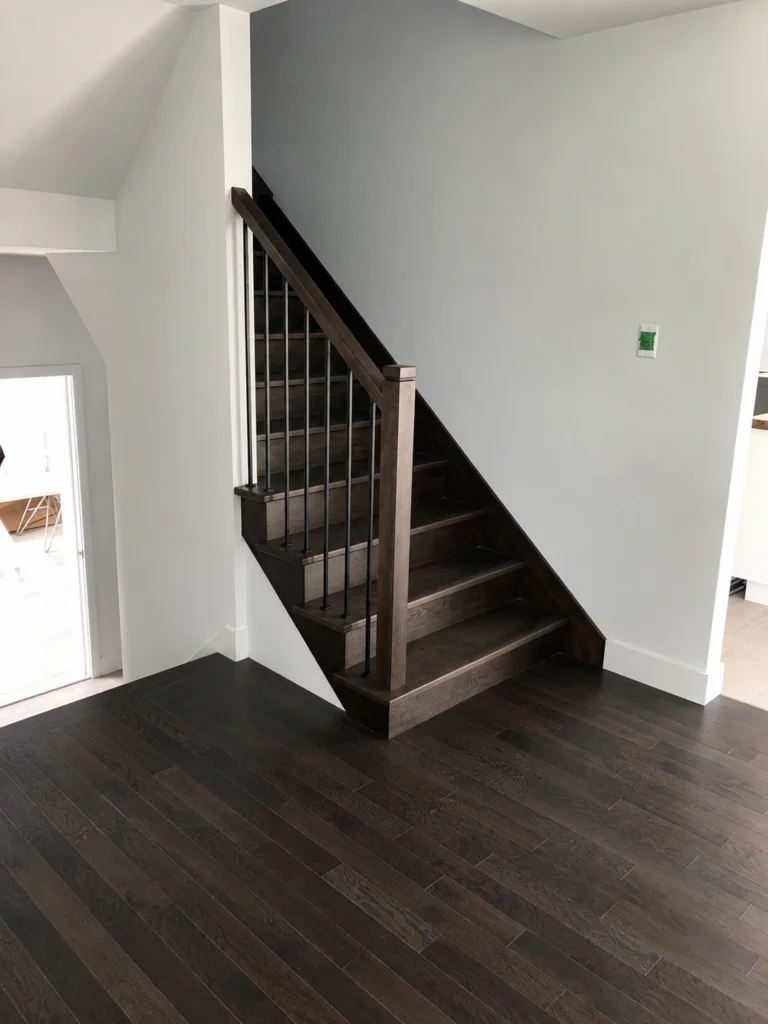 STRAIGHT STAIRCASE straight staircase stained dark with steel balusters
Varennes - Dark Gray-Brown Stained Hardwood
STRAIGHT STAIRCASE straight staircase stained dark with steel balusters
Varennes - Dark Gray-Brown Stained Hardwood
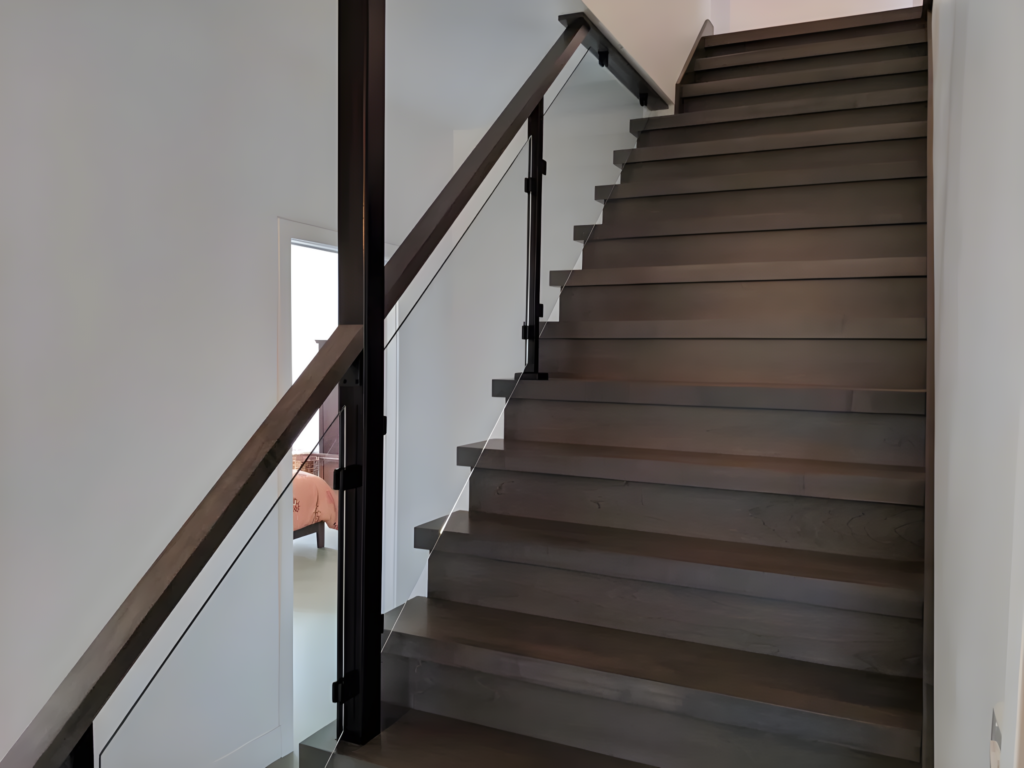 STRAIGHT STAIRCASE straight wood staircase stained gray with glass railing
Sainte-Julie - Gray-Brown Stained Wood
STRAIGHT STAIRCASE straight wood staircase stained gray with glass railing
Sainte-Julie - Gray-Brown Stained Wood
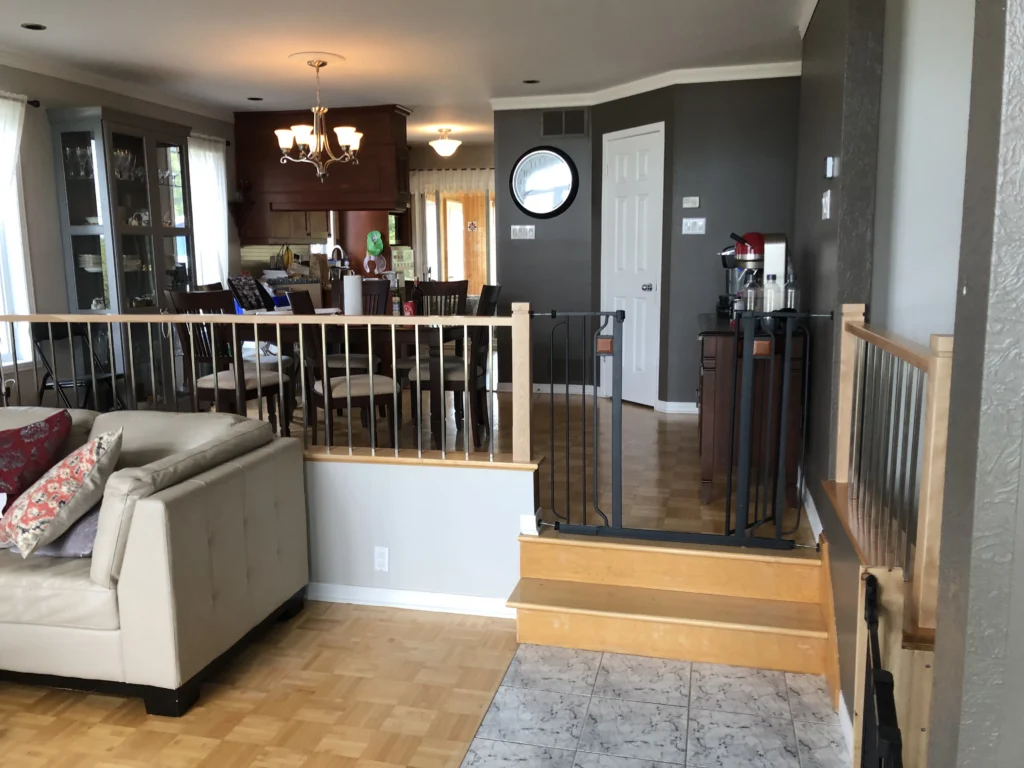 STRAIGHT STAIRCASE straight staircase in light maple with railing with steel balusters
Saint-Hubert - Érable naturel clair
STRAIGHT STAIRCASE straight staircase in light maple with railing with steel balusters
Saint-Hubert - Érable naturel clair
 CENTRAL STRINGER Floating Staircase with Maple Treads and Glass Railing
Saint-Bruno-de-Montarville - Érable à teinte claire
CENTRAL STRINGER Floating Staircase with Maple Treads and Glass Railing
Saint-Bruno-de-Montarville - Érable à teinte claire
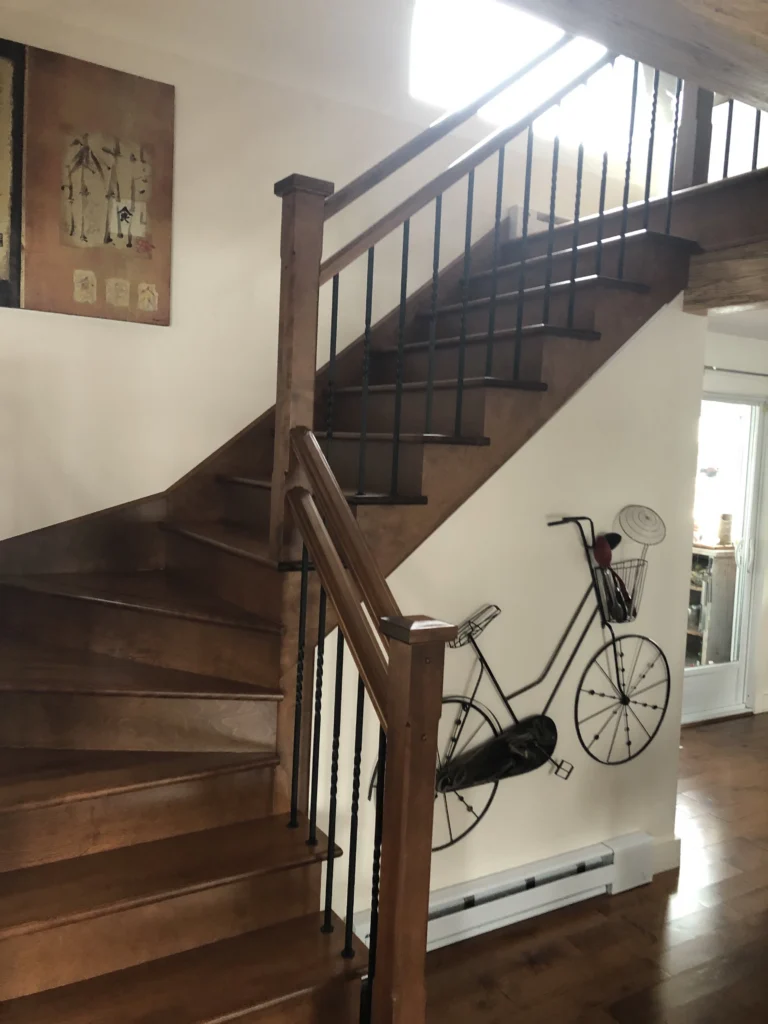 WINDER STAIRCASE winder wood staircase stained brown with wrought-iron balusters
Brossard - Brown-Stained Hardwood
WINDER STAIRCASE winder wood staircase stained brown with wrought-iron balusters
Brossard - Brown-Stained Hardwood
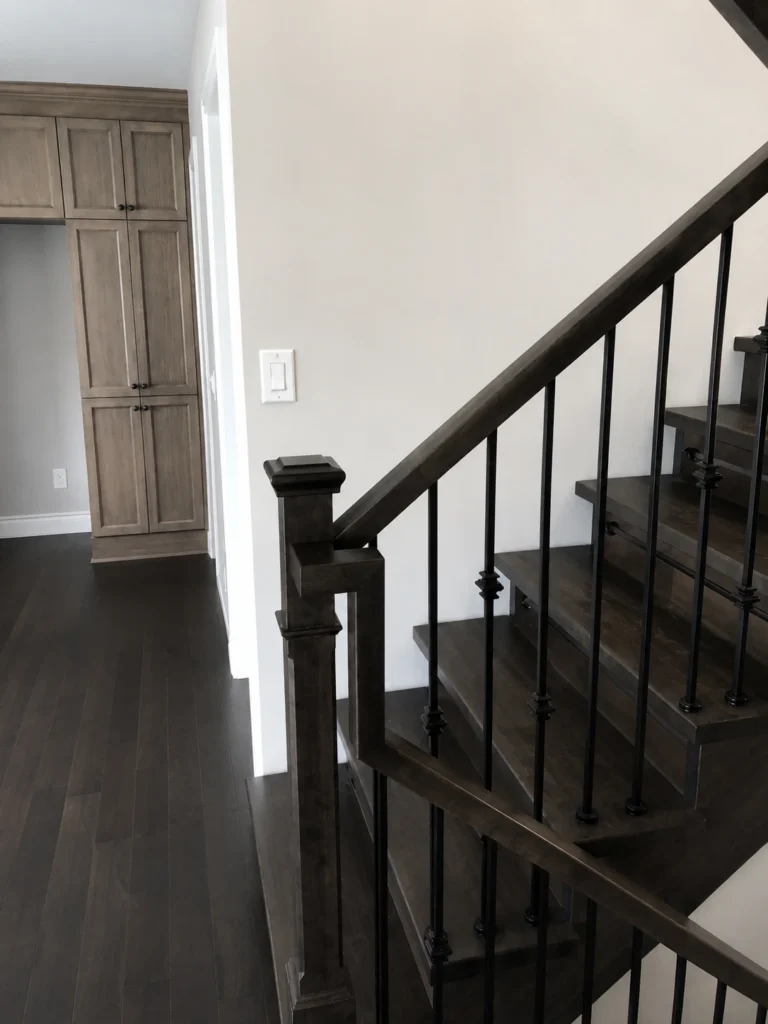 WINDER STAIRCASE winder wood staircase stained gray-brown with steel balusters
Saint-Lambert - Gray-Brown Stained Wood
WINDER STAIRCASE winder wood staircase stained gray-brown with steel balusters
Saint-Lambert - Gray-Brown Stained Wood
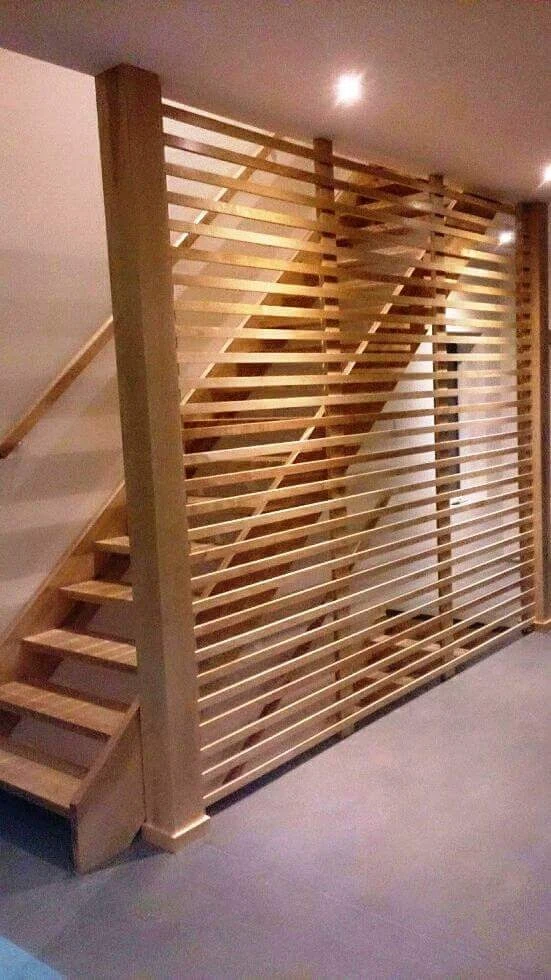 STRAIGHT STAIRCASE straight staircase in light maple with wood-latted wood-slat screen
Longueuil - Érable naturel clair
STRAIGHT STAIRCASE straight staircase in light maple with wood-latted wood-slat screen
Longueuil - Érable naturel clair
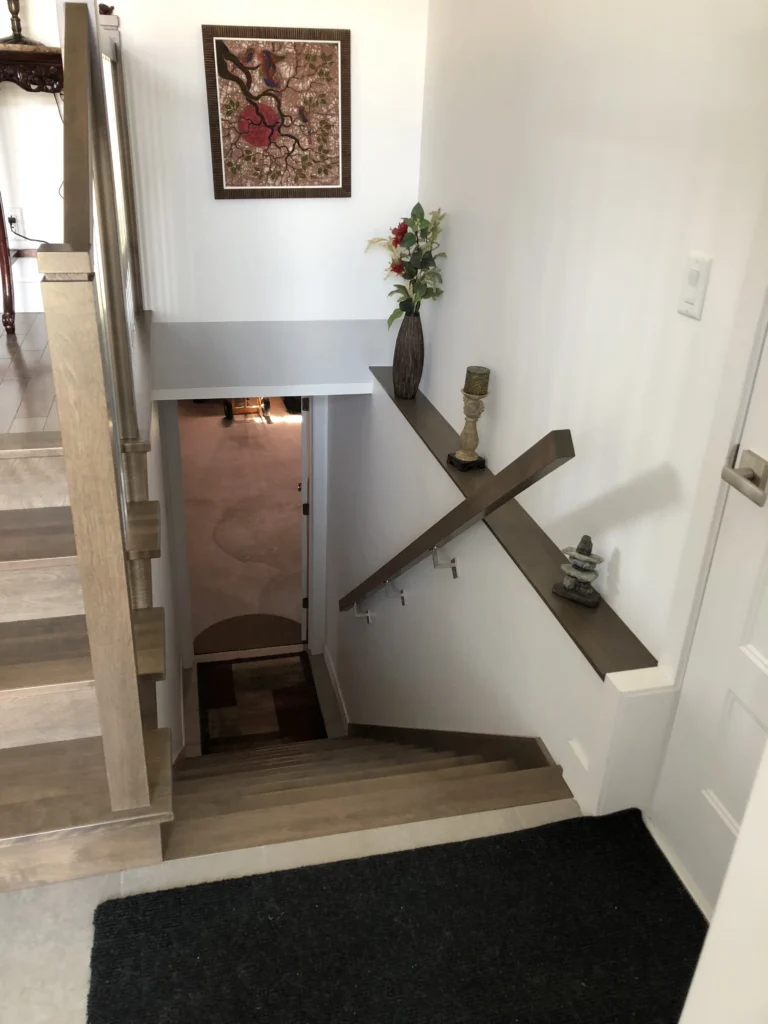 WINDER STAIRCASE winder wood staircase stained gray with a wood handrail
Granby - Taupe-Gray Stained Wood
WINDER STAIRCASE winder wood staircase stained gray with a wood handrail
Granby - Taupe-Gray Stained Wood
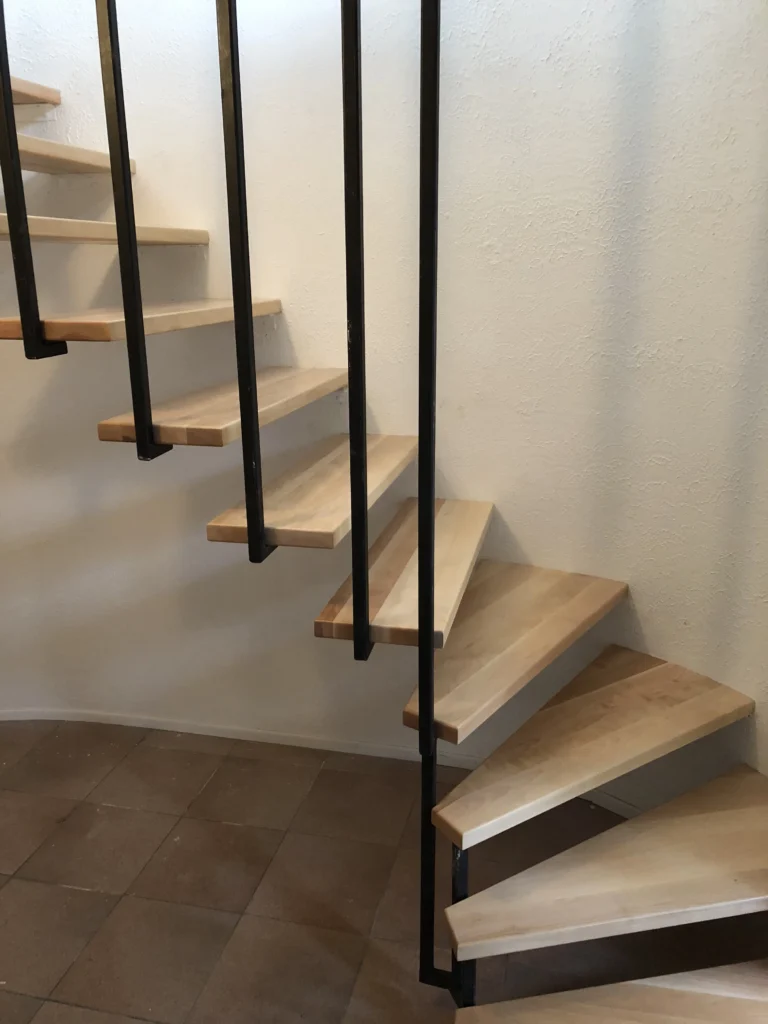 WINDER STAIRCASE winder staircase in light maple with floating winder treads
Magog - Érable naturel clair
WINDER STAIRCASE winder staircase in light maple with floating winder treads
Magog - Érable naturel clair
Glass is one of the options of our railing and handrails. Compare it to railing of wood and steel and balusters to wrought iron, including the handrailwhich remains necessary in all cases.