Cut to Follow the Grain
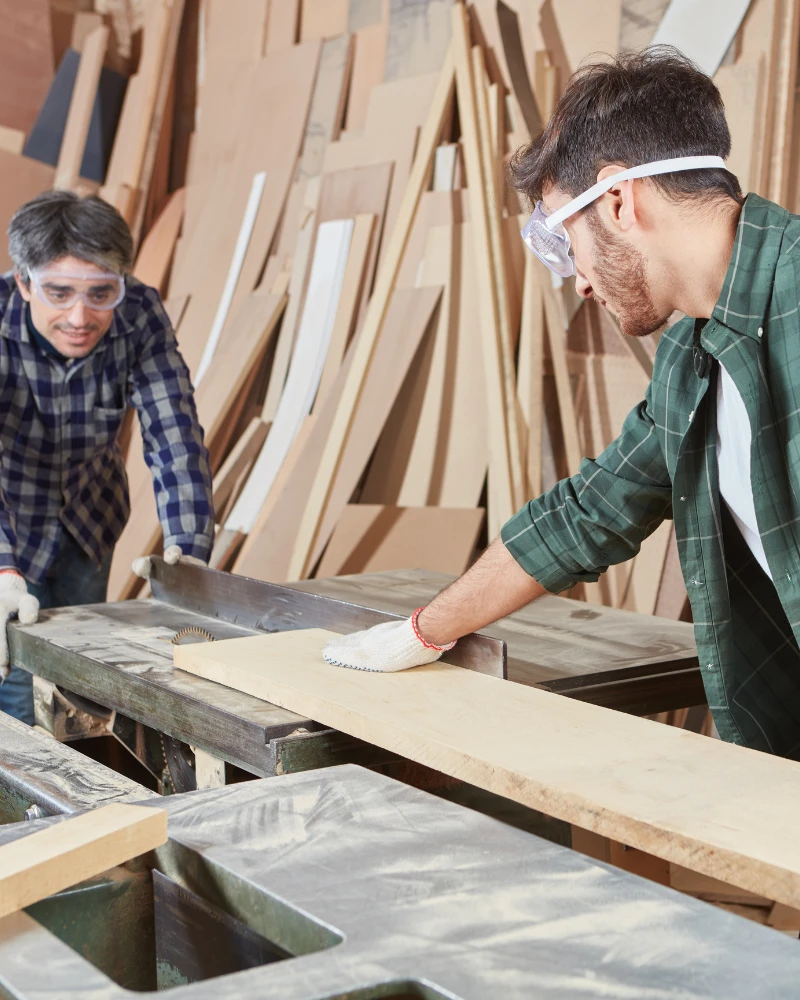
Each piece is cut with the grain direction in mind, which limits cupping in a wide tread.
A hardwood staircase is a choice of species — not just a material. At Escaliers Messier, we manufacture your treads, stringers and railings from Quebec hardwoods such as oak, maple and more.
Measurement, Manufacturing, Installation and Finishing — Everything Is Included
« The team took the measurements themselves, delivered exactly on schedule and the installation was flawless. No surprises. »
hardwood refers to hardwoods — oak, maple, birch, walnut, ash — as opposed to softwoods. On a staircase, it’s not just about resistance to passing, but it’s what allows the staircase to be sanded and refined several times during its life, rather than having to be replaced.
A staircase covered with thin veneer or a re-coated layer does not offer this margin, and once the wear layer has begun, there is nothing left to be taken over. This is the most tangible difference between the two, and it is measured in decades rather than in the appearance on the day of delivery.
An hardwood exchanges moisture with the piece: it swells in summer, it withdraws in winter. This movement is not a defect, it is a given. We control it by letting the wood acclimatize in the house before installation, and by sealing each piece on its six faces rather than on its only visible faces.
The direction of the thread is equally important. A wide step cut without considering the thread will eventually tuile, that is, it will slightly dig in the middle.This is why the very thick treads are often assembled from edge-glued slats rather than cut in a single piece.
None of this is visible at delivery, but it is visible five years later, when the fly is still flat and the joints have not opened.
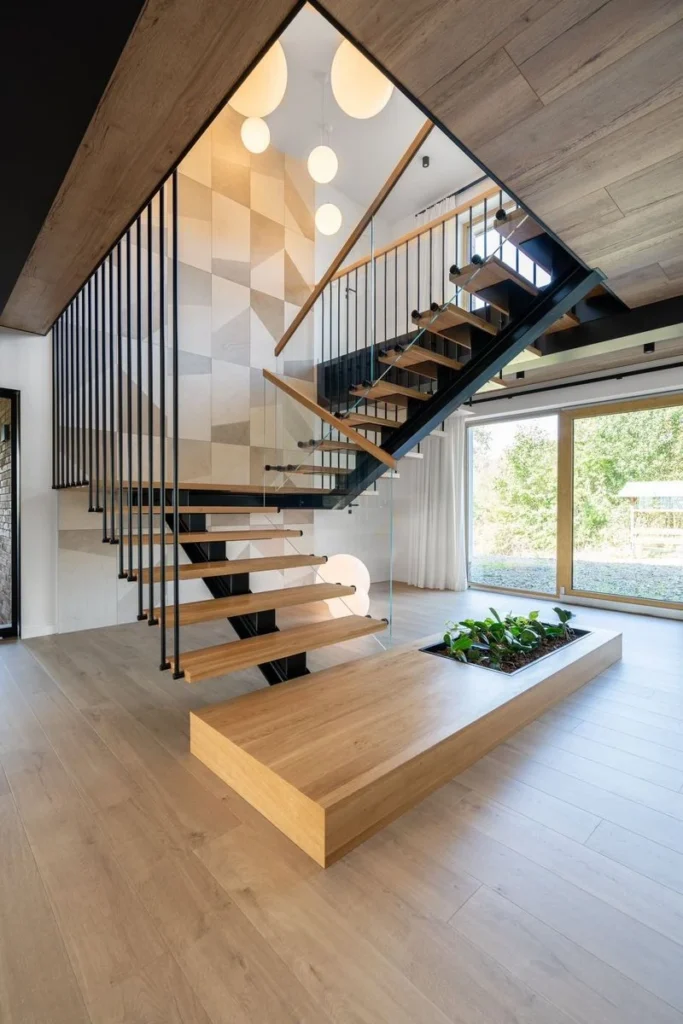
A wood species is selected for its hardness, grain and response to stain, not only for the colour of a sample. Wood expands in summer and contracts in winter.
Each piece is cut with the grain direction in mind, which limits cupping in a wide tread.
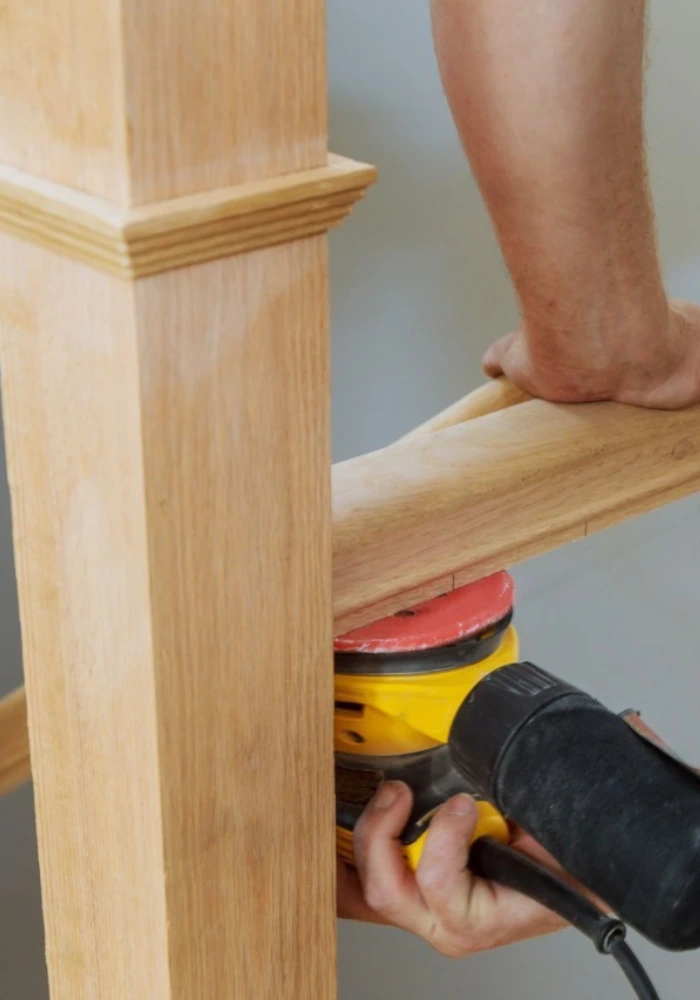
A tread sealed on the top, bottom and edges exchanges less moisture and moves evenly.
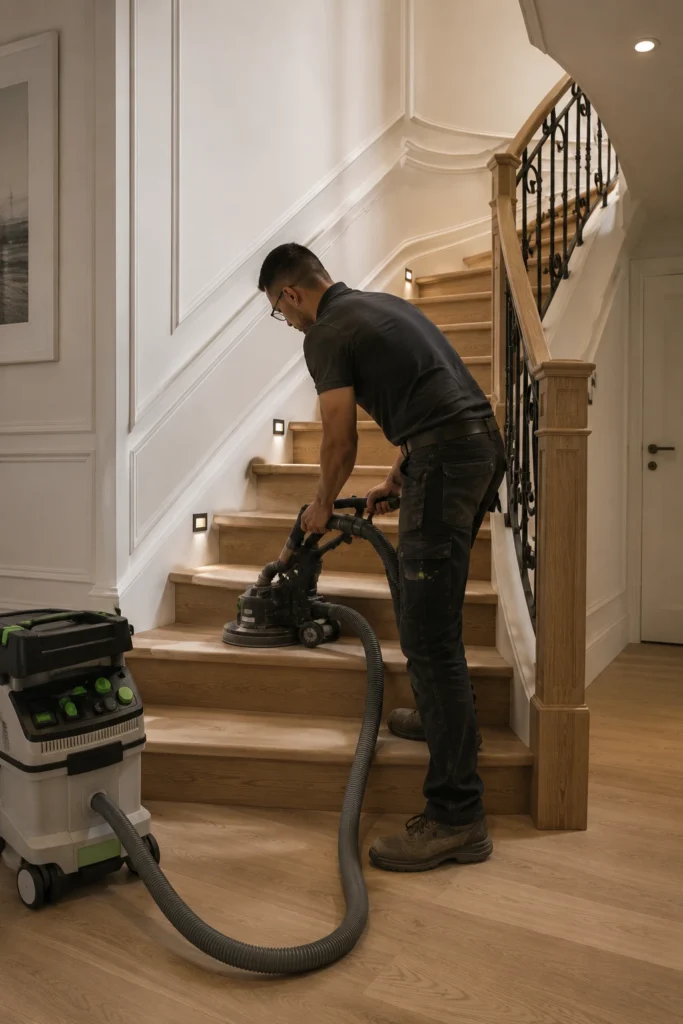
A hardwood staircase can be sanded and refinished. That is what sets it apart from a covered staircase.
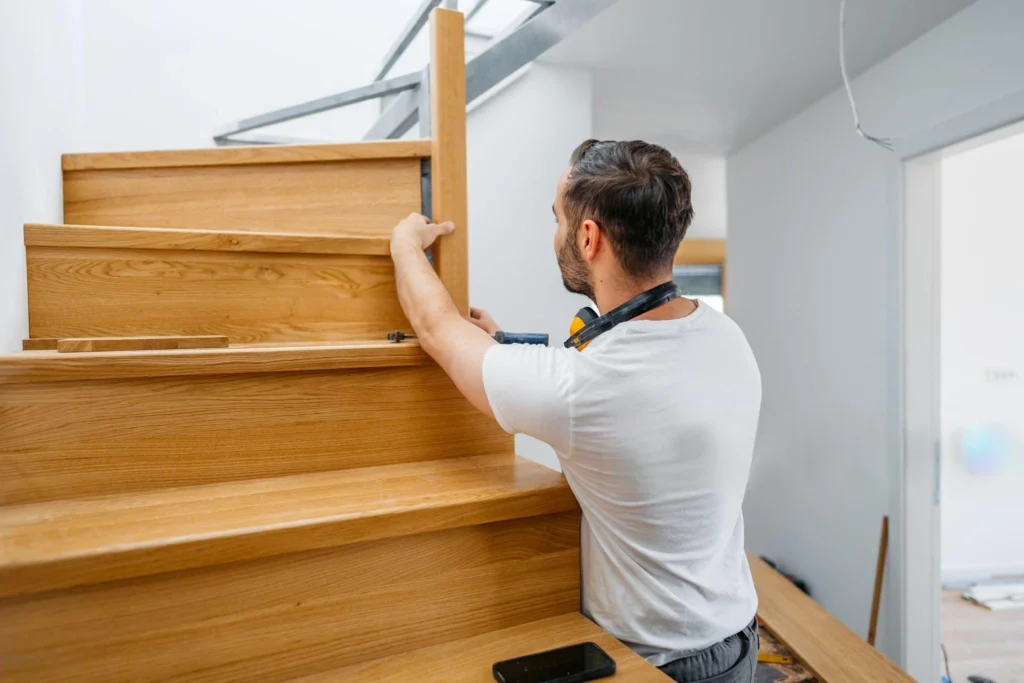
The wood remains in the home before installation so it can acclimatize to the ambient humidity.
Each wood species performs differently under foot traffic: explore our custom staircases et nos projects.
The white oak and the maple are among the dense ones we work with, and are the best for a very long fly. The birch and the walnut are a little softer, but offer other shades. Hardness is just one criterion among others: the grain and the reaction to the stain matter just as much. stairs in oak.
Like any wood floor, it marks, especially at the stair nosing where the passage is concentrated. The finish takes the essentials: a satin finish better conceals micro-scratches than a very glossy varnish, which highlights the slightest defect in a razor light.
Yes, and it’s a step that you never see on the finished result. The wood must balance with the humidity of the house before it is fixed, otherwise it continues to move once in place and opens up gaps in the assemblies.
The oak, which is very open, takes the stain deeply and leaves the grain visible. The maple, which is more closed, reacts less uniformly and requires special preparation to avoid stains.We always test on a drop of the same piece before engaging in the flight.
This depends on the thickness of solid wood remaining above the joints, not a fixed number. On thick treads, the margin is comfortable and allows several repeats spaced many years apart.On a staircase already repeated several times, we measure before promising anything. renovation of stairs.
Discover also our stairs in oak, but stairs in birch and nos Projects, or request a quote.