Continuous Handrail
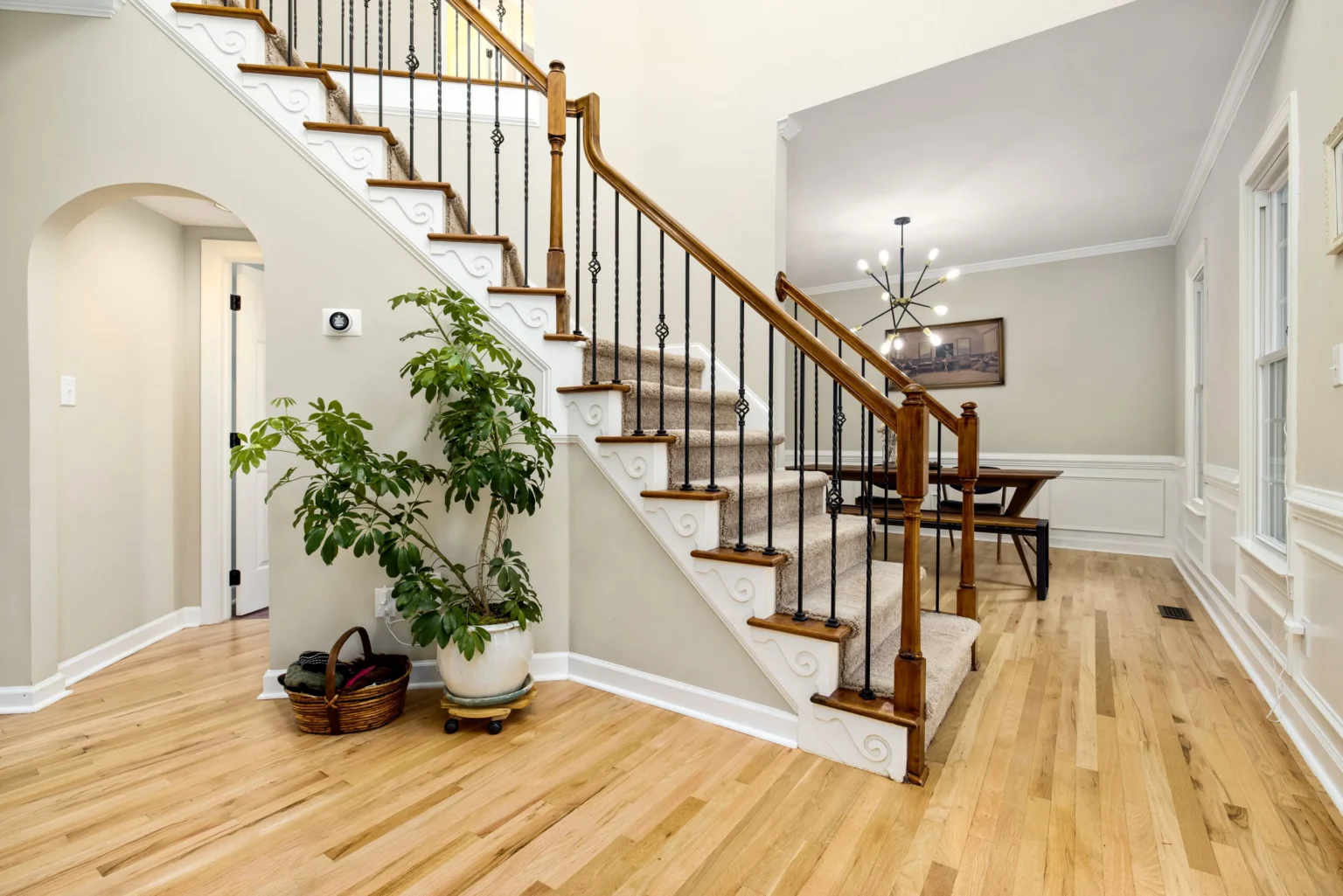
The grip must remain continuous along the entire flight, including past posts and around turns.
Interior metal stair railings custom — steel, wrought iron, aluminum or stainless steel — machined in our workshop and installed by our team.
Measurement, Manufacturing, Installation and Finishing — Everything Is Included
« The team took the measurements themselves, delivered exactly on schedule and the installation was flawless. No surprises. »
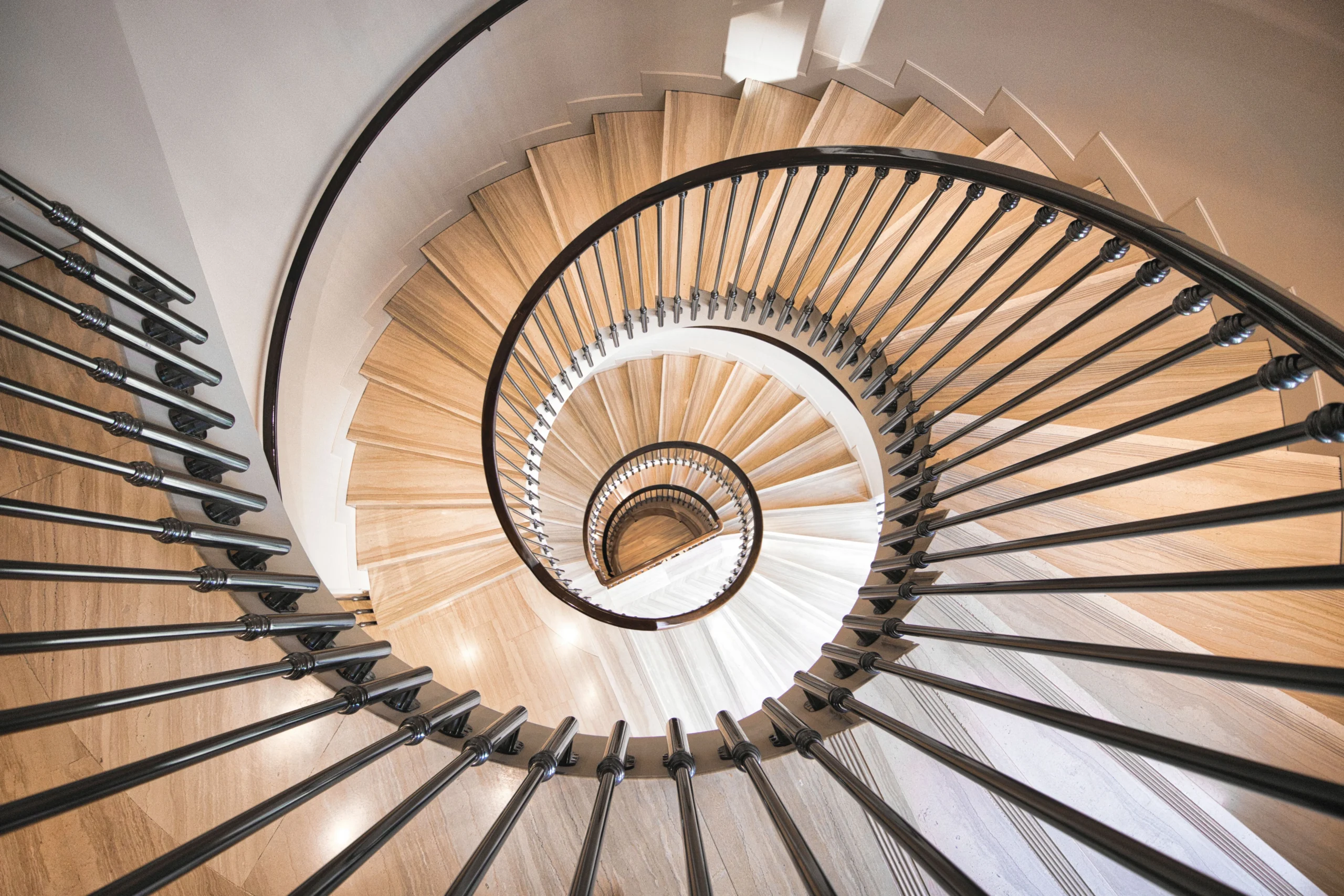
From afar, a baluster made of matt black steel and a baluster made of matt black aluminium look the same. The choice is elsewhere: on the rigidity, on the fixation, on what the finish can take. handrail of hardwood — metal carries the design, wood ensures the grip.
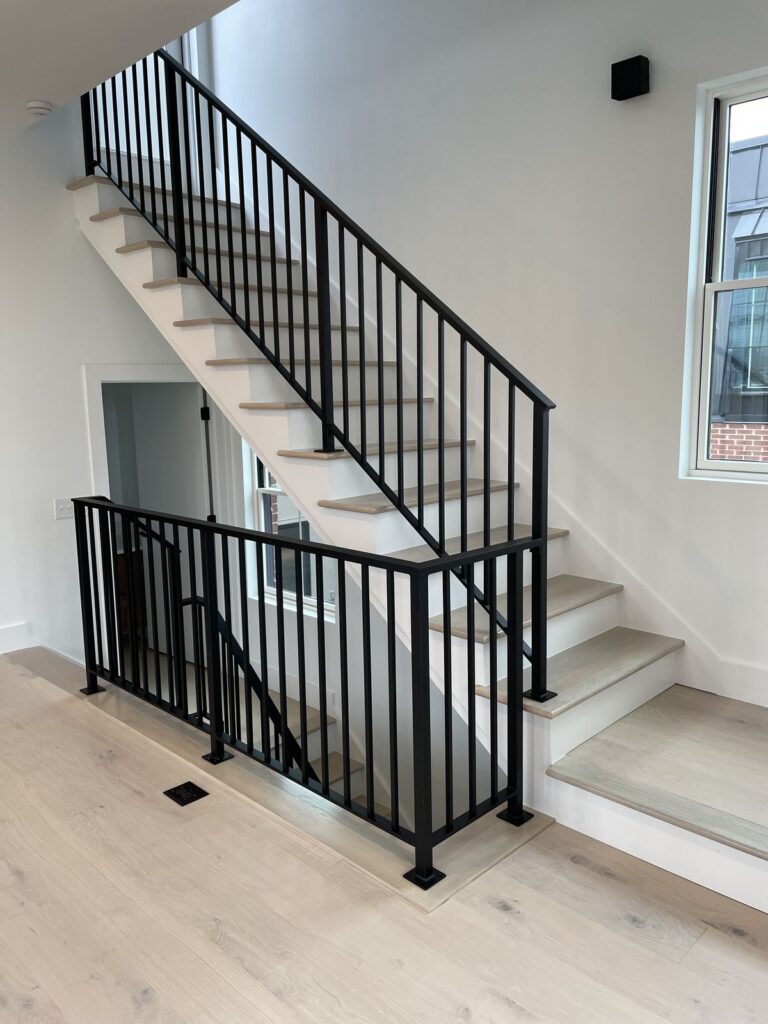
At equal cross sections, steel takes on more load than aluminum, which allows for thin balusters — a square of ½ or 1/2 inch — without the flying to appear brittle. Matt black has been the dominant colour for a few years, but baked paint can be done in just about any colour, applied before installation, including anchors.
A metal railing weighs more than a Glass Railings : the load is taken up in the stringer and the end posts, and this is the first point we check on an existing staircase.The spacing of the balusters, however, is not negotiable: it derives from the maximum opening allowed by the Quebec Building Code.
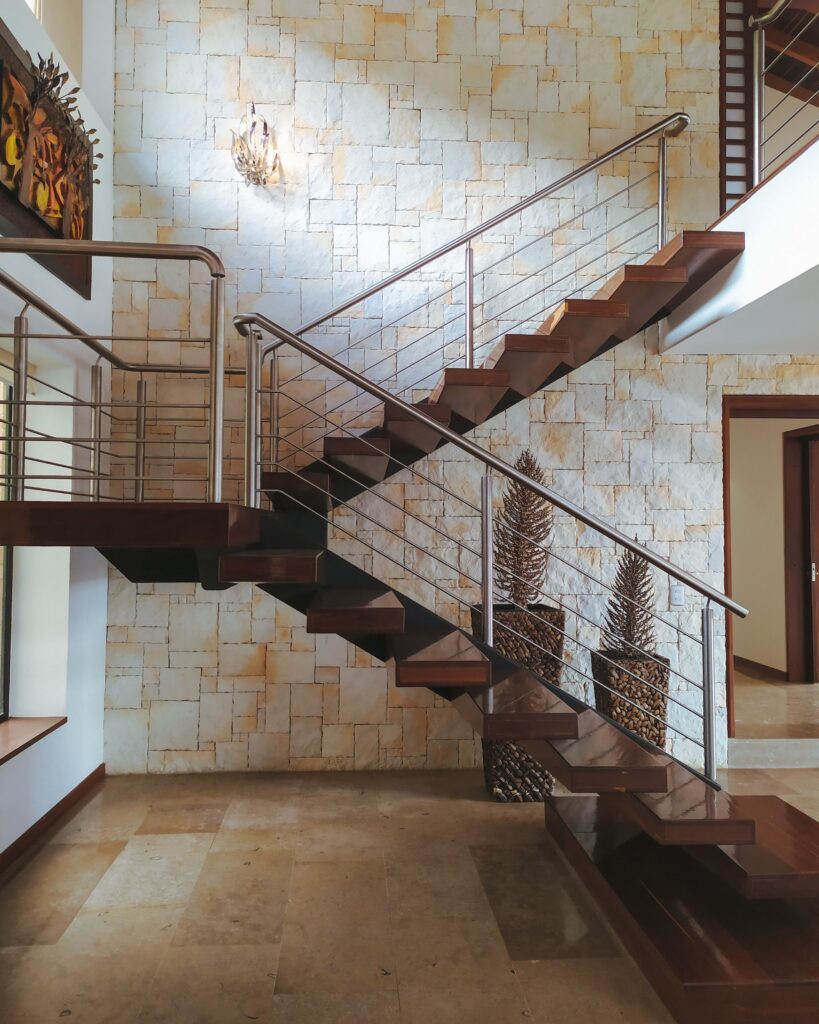
A railing made of wrought iron is made of balusters solid steel, shaped and then assembled, not of profiles cut in series. The forgings leave marks, the volute does not have the same radius: this controlled irregularity is read in raised light, on site, much more than on a catalogue photo.
It is the design that dates a railing, not the material: a flat, matte black baluster, without a volute, fits very well with a contemporary fly.
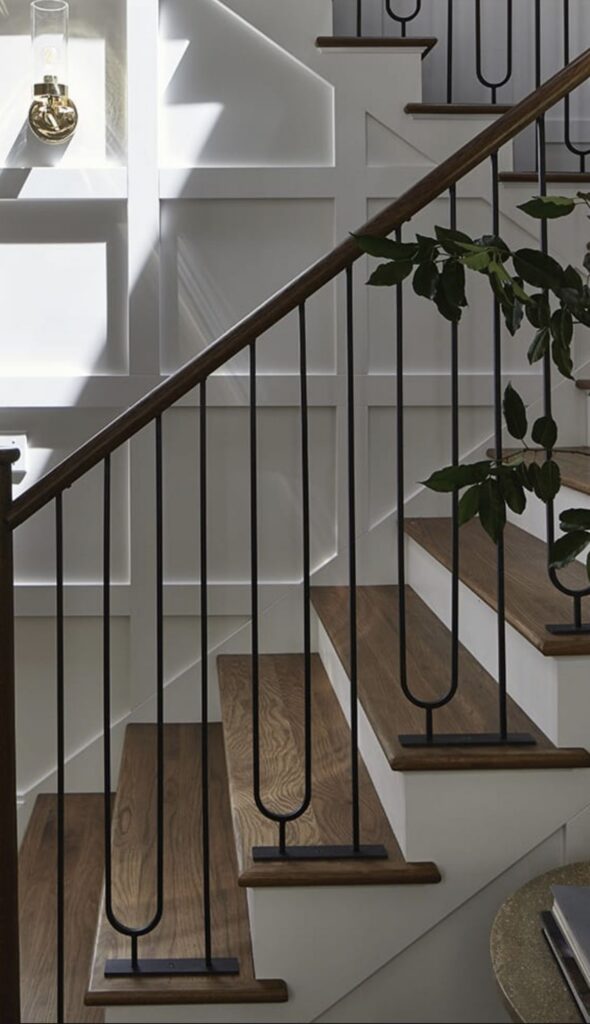
Aluminium does not rust, and it is particularly relevant in two cases: a staircase near an indoor pool or spa, and a project where the weight of the railing is a problem on an existing structure. Elsewhere, steel has the best balance between rigidity and thinness.
Stainless steel is a solid material: brushed, it does not flake and does not re-paint. It is mainly used in glass clamps, round handrail and stretched cables. This is the contemporary line, where metal must fade away before the eye.
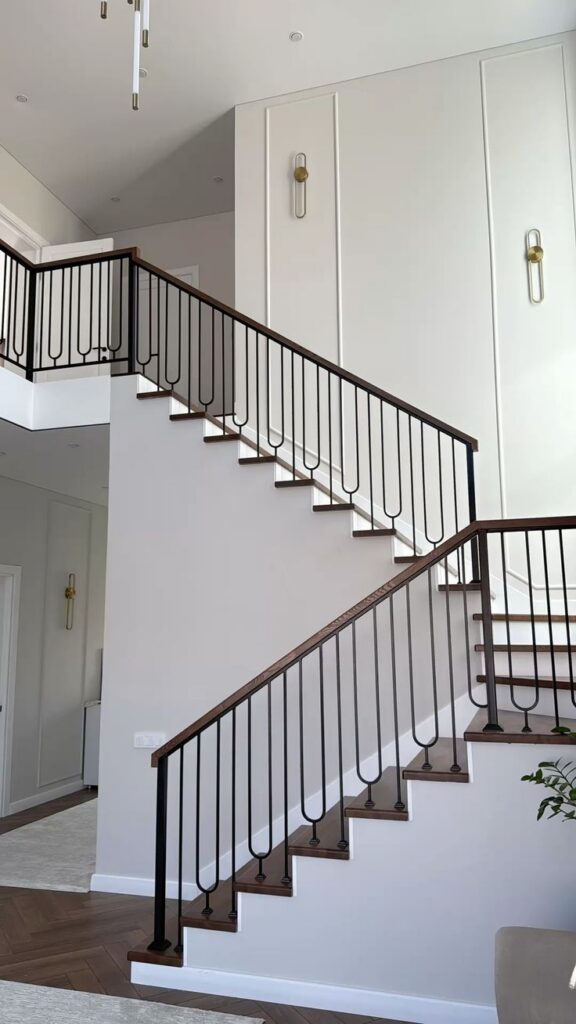
Railing height, handrail grip diameter and baluster spacing are governed by the Quebec Construction Code. The rest comes down to craftsmanship.
The grip must remain continuous along the entire flight, including past posts and around turns.
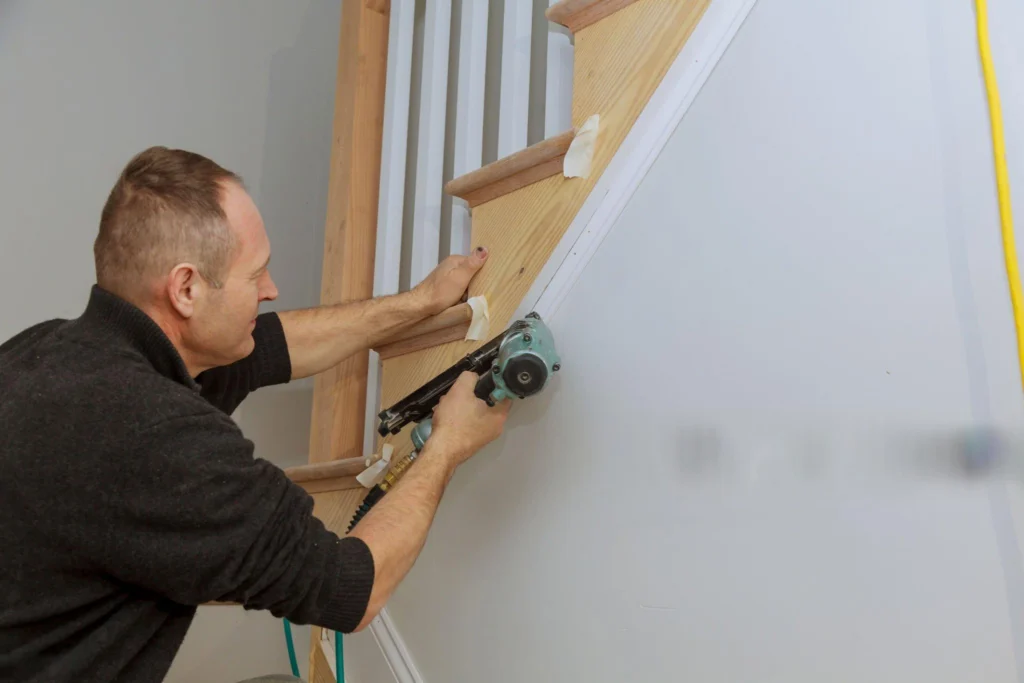
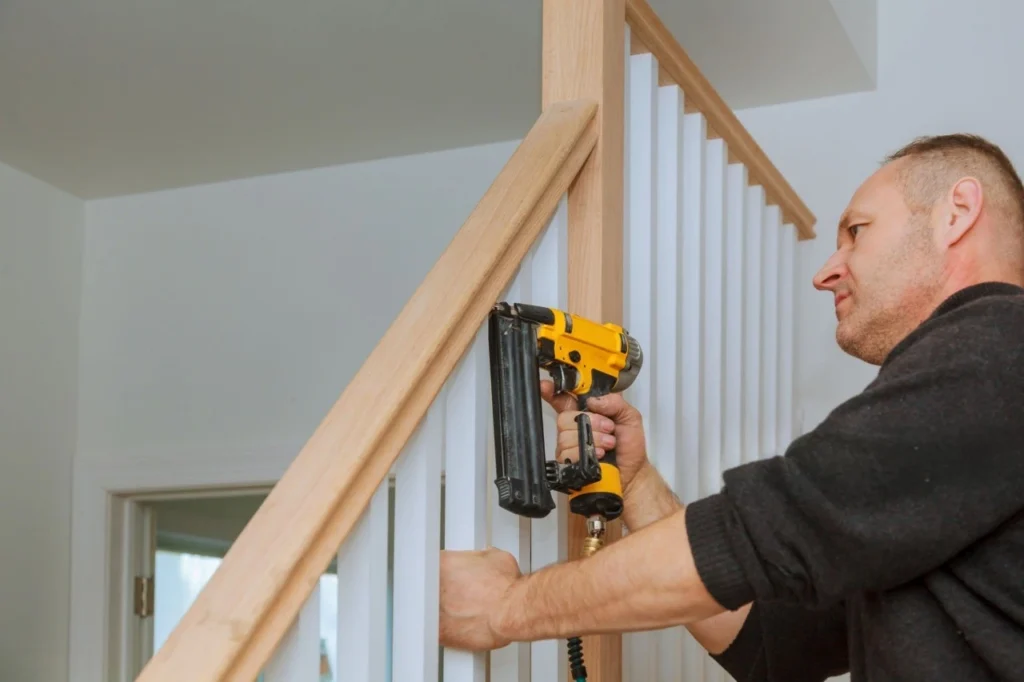
Each baluster is aligned and fastened individually. A difference of only a few millimetres is visible across the full run.
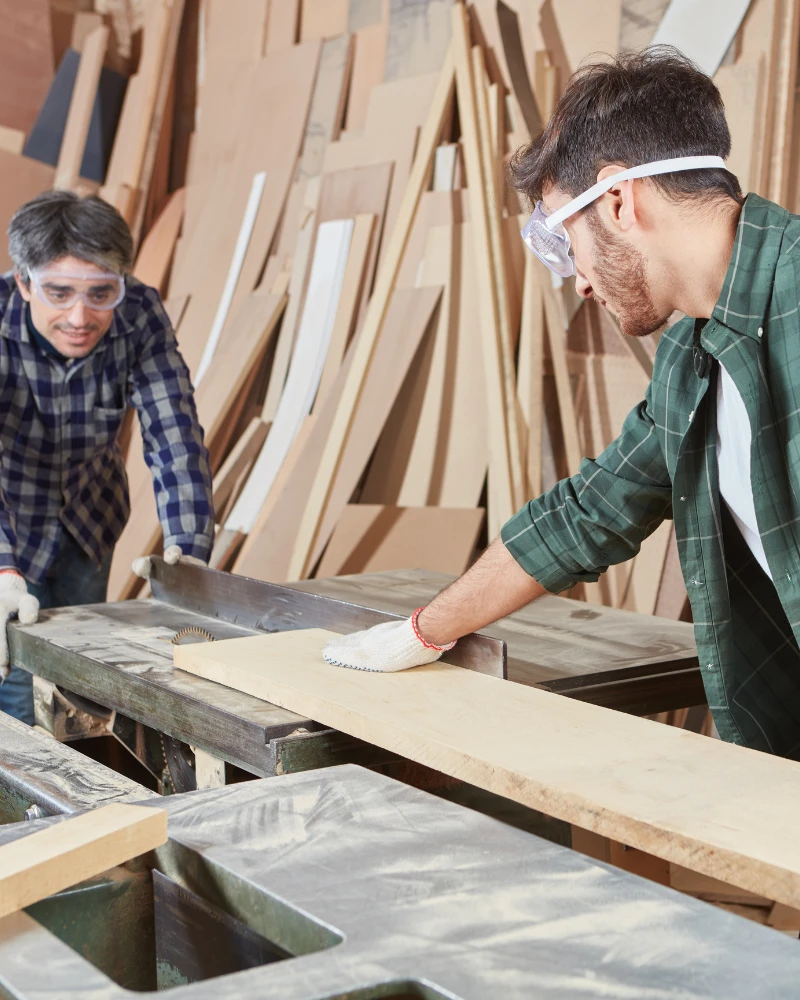
A post is anchored to the framing, not the floor covering. That is what resists a lateral load.
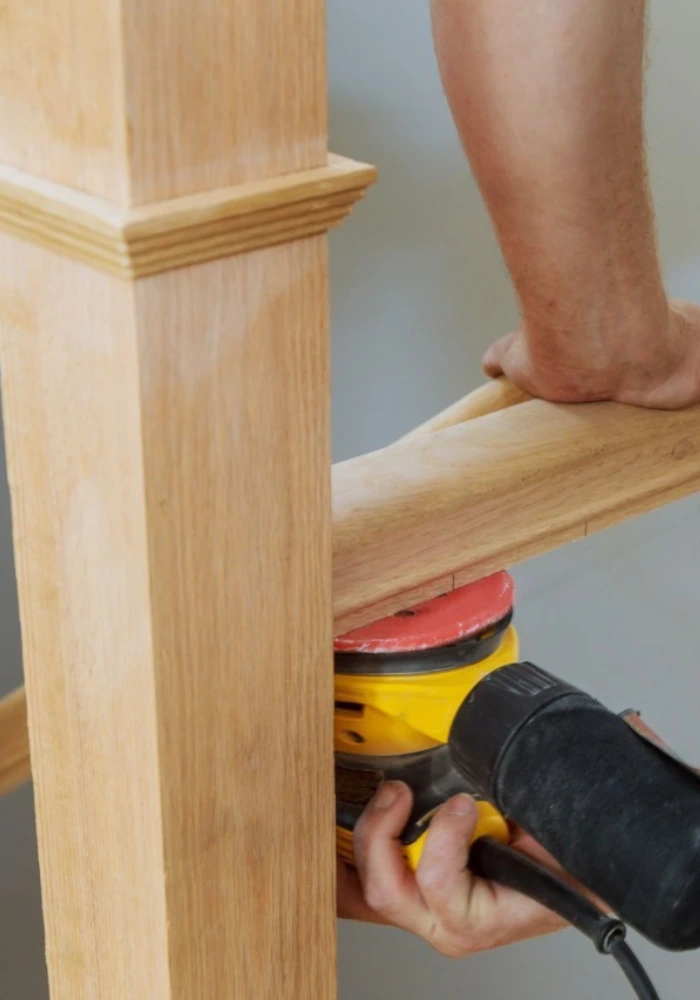
The handrail receives its final sanding by hand. It is the only part of the staircase touched every day.
Rigidity and weight. Steel takes more load at equal cross section, allowing for thin balusters. Aluminum is about three times lighter and does not rust, but requires more generous sections for the same hold. Inside, steel prevails in most cases; aluminum takes the advantage in wet air or when the structure cannot carry the weight.
Very rarely, as long as the finish remains intact. The sensitive points are the deep scratches and the feet of balusters, where the washing water can stagnate; a local touch-up is enough.
The machining first: a plain baluster remains close to a standard profile, a volute taken from the forging on each baluster changes the order of magnitude. The number of balusters then, fixed by the opening allowed by the Code. Metal finally — stainless steel costs more than painted steel.
Often yes. If the stringers and stair nosing are healthy, a metal railing is placed on the existing one without touching the treads.The weight remains the point to check. renovation of stairs.
Yes, and it is even the original combination: balusters of wrought iron under a handrail of hardwood. What dates a railing, it is the design of the baluster, not the material. classic staircases.
Yes, our workshop is specialized in interior stairs and their railings: railing for the flight, landing for the mezzanine and landing for the balcony. An exterior balcony railing meets other constraints, such as freezing and thawing, and other profiles.
Discover also our Handrails, but railing of stairs, but glass railings and nos Projects, or request a quote.