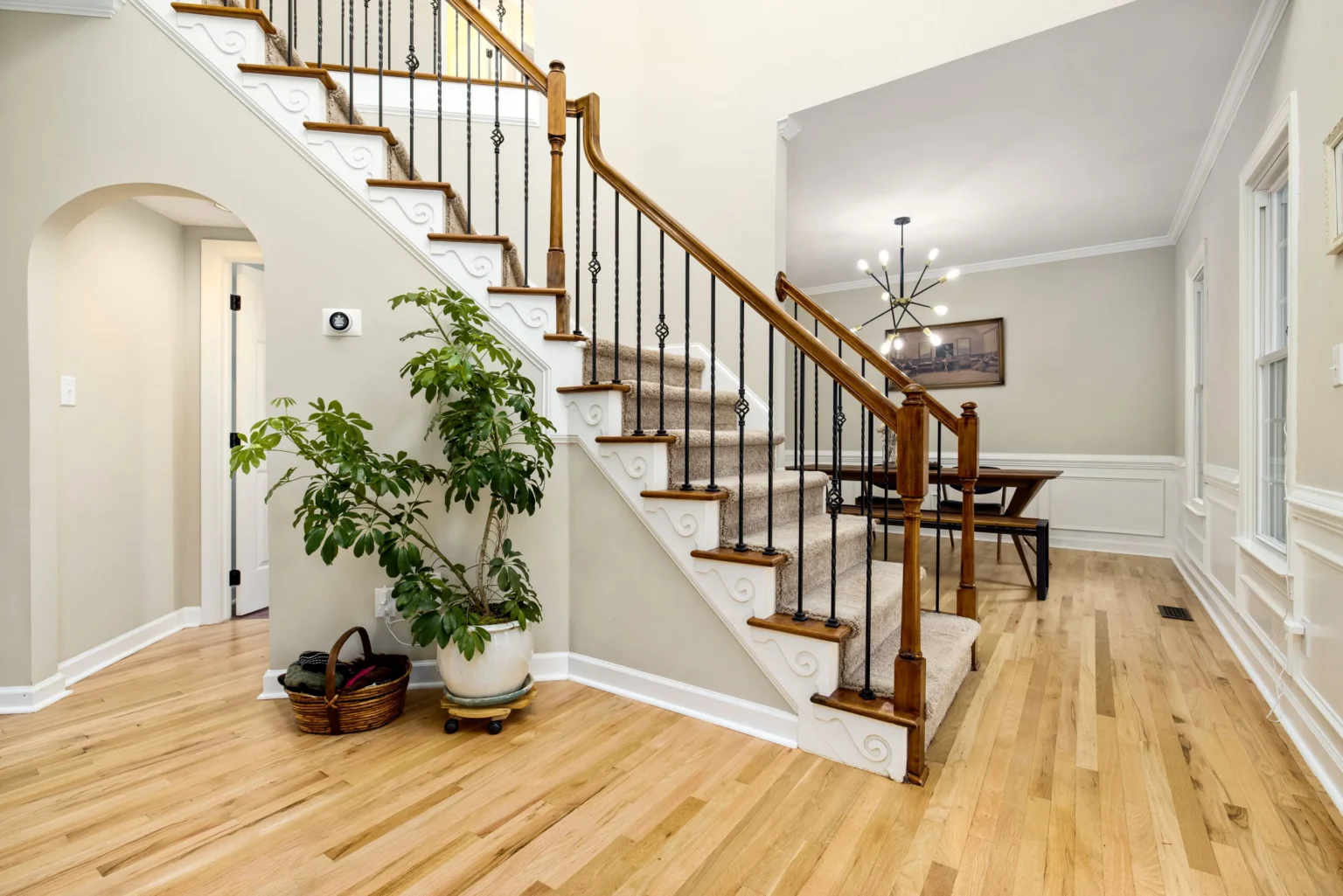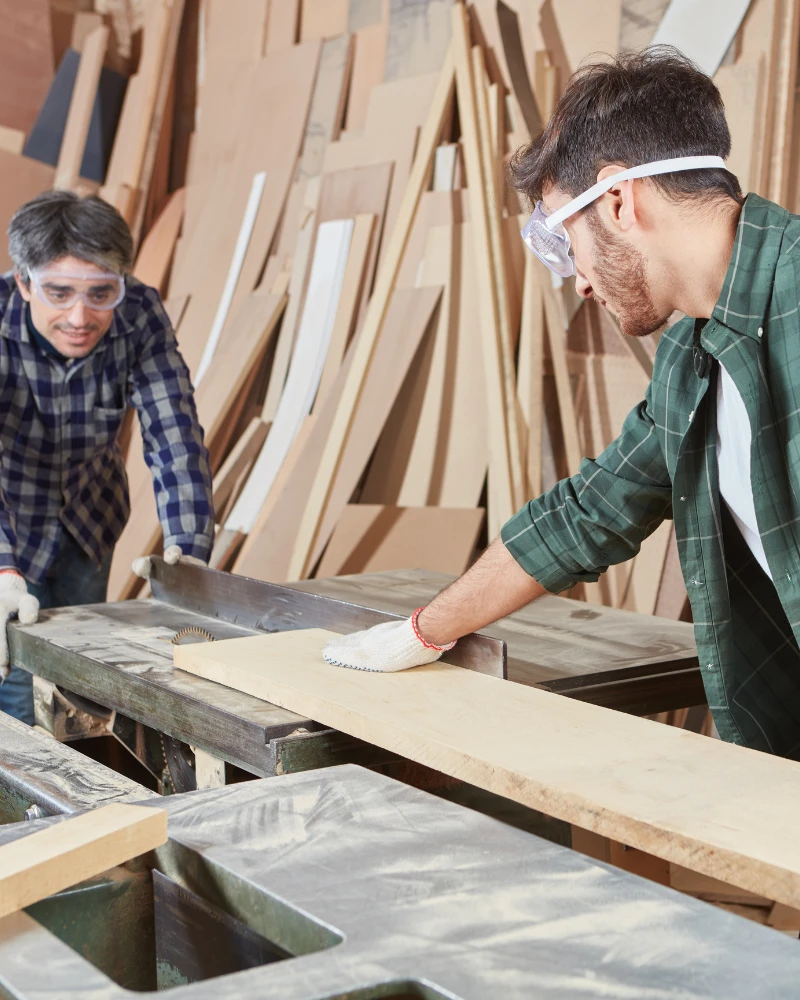
Cut to Follow the Grain
Each piece is cut with the grain direction in mind, which limits cupping in a wide tread.
The birch is the warmest hardwood in Quebec, with a rosy to reddish hue, soft veins and fine grain.
Measurement, Manufacturing, Installation and Finishing — Everything Is Included
« The team took the measurements themselves, delivered exactly on schedule and the installation was flawless. No surprises. »
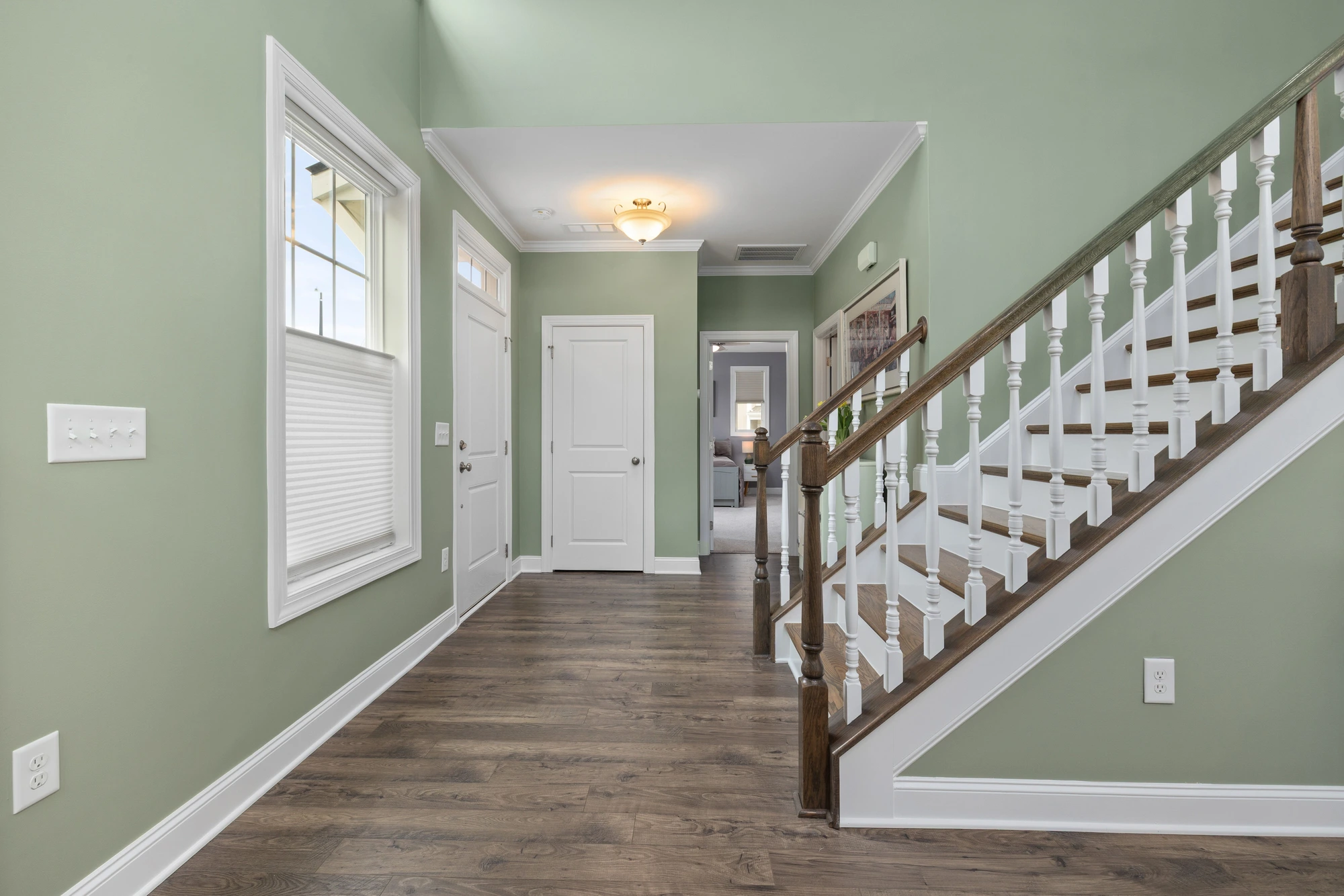
birch is a very fine and regular grained hardwood with almost no marked figures, with a natural shade ranging from pink to warm brown. It is the opposite of oak. Where oak displays its pores in long visible lines, birch offers a smooth, uniform surface that is not very eye-catching.
Its hardness is below that of white oak and maple, but it is still suitable for residential use. It is easy to work and sand, and the finish is very uniform, precisely because its grain is tight and there is no alternation of soft and hard areas. It is also very resistant to corrosion.
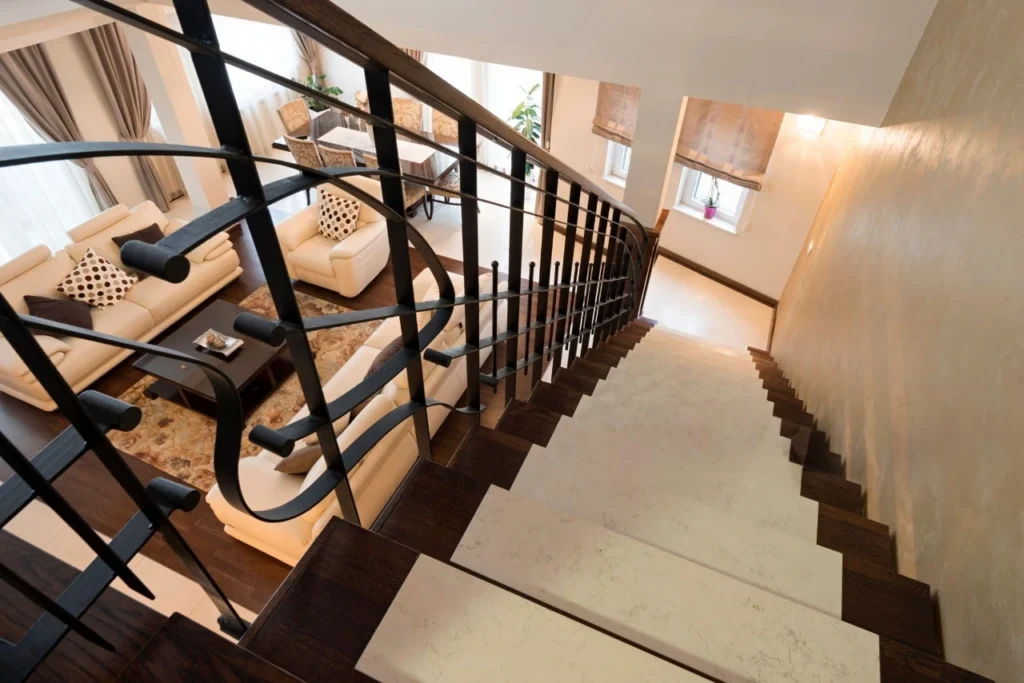
This is the special feature of birch, and it is important to know this before choosing: it darkens under the effect of light. A staircase laid in a light shade darkens significantly during the first months, then more slowly for years, the movement is towards reddish brown, and it is irreversible.
This has two concrete consequences: areas protected by carpet, furniture or walls change less quickly than the rest, and the gap becomes visible. And if the staircase has to match existing birch woodwork, it is not the current shade that should be targeted, but the shade that the new wood will have in a year.
We take this into account when we make the stain, deliberately aiming brighter than the target, and we always leave a sample to the customer so that he can follow the evolution.
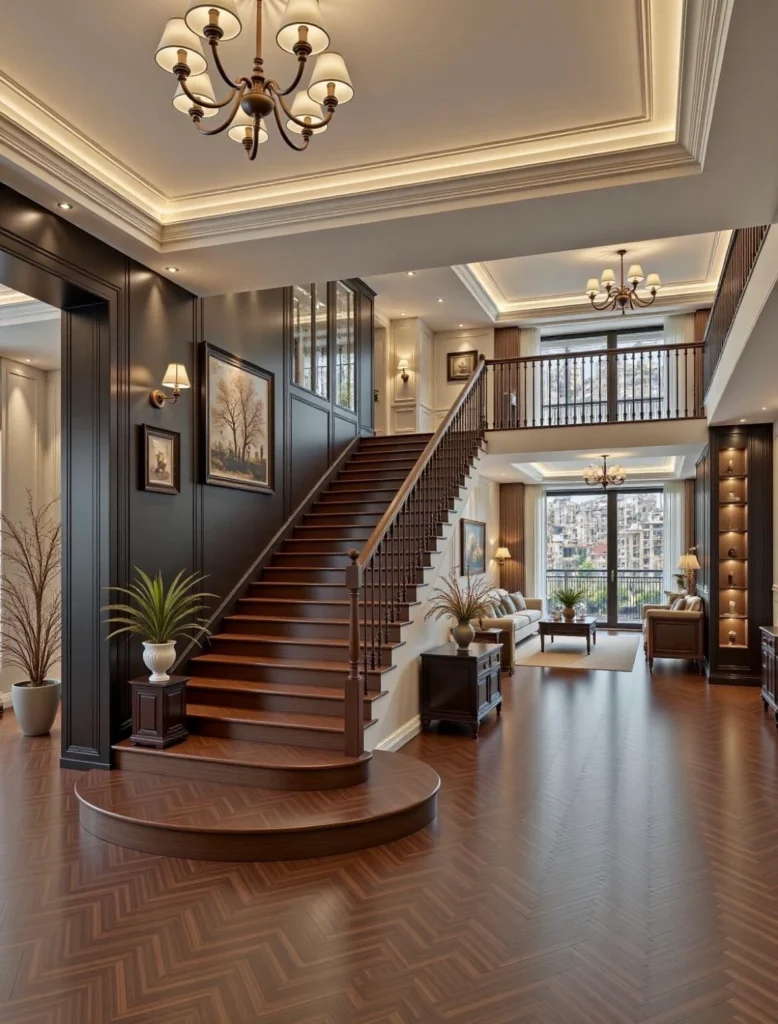
A wood species is selected for its hardness, grain and response to stain, not only for the colour of a sample. Wood expands in summer and contracts in winter.
Each piece is cut with the grain direction in mind, which limits cupping in a wide tread.
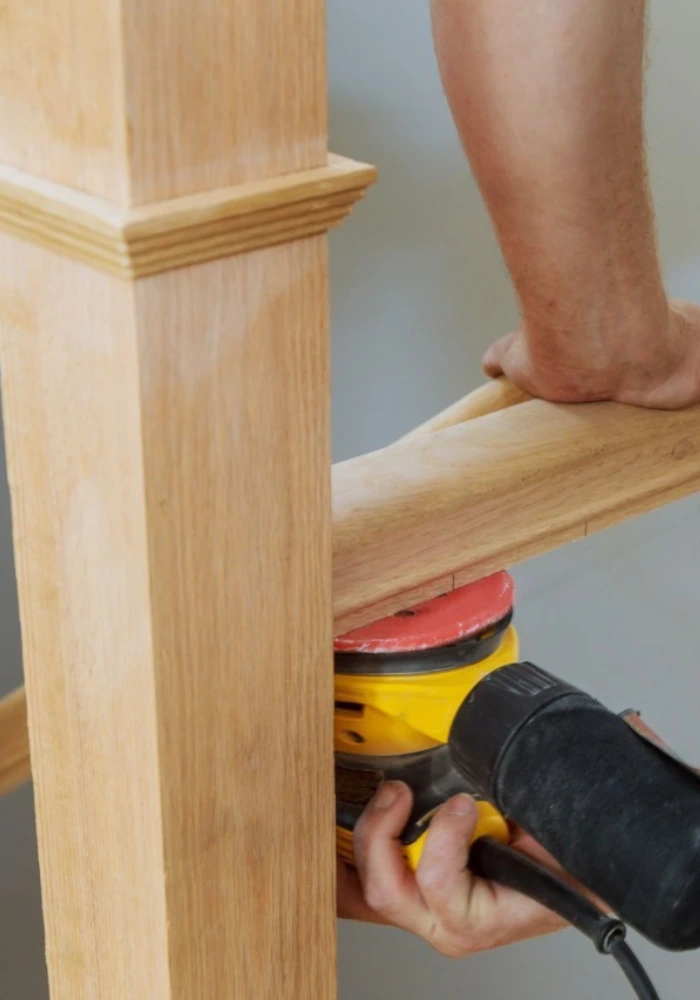
A tread sealed on the top, bottom and edges exchanges less moisture and moves evenly.

A hardwood staircase can be sanded and refinished. That is what sets it apart from a covered staircase.
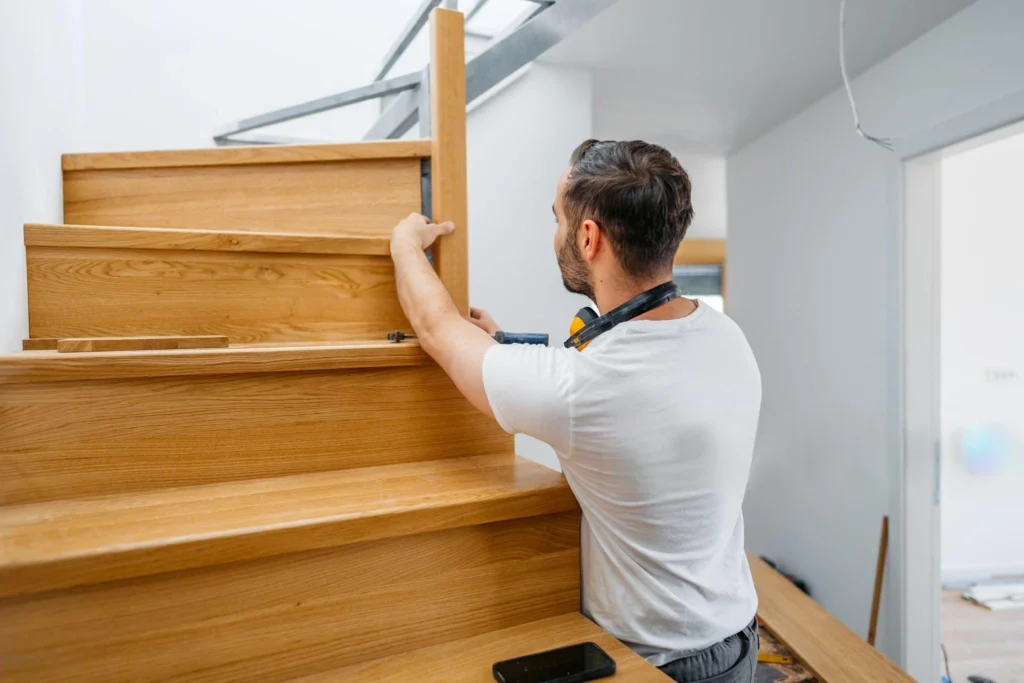
The wood remains in the home before installation so it can acclimatize to the ambient humidity.
Each wood species performs differently under foot traffic: explore our custom staircases et nos projects.
For a residential flight, yes. It is less dense than the white oak or maple, so it marks a little more easily on the stair nosing, where the passage is concentrated. On a main staircase frequently used by a whole family, the oak offers a higher margin. stairs in oak.
Under the influence of light, especially ultraviolet rays, which gradually alter the wood’s surface compounds, the change is rapid in the first months, then slows down without ever stopping completely. No finish can completely block it, even if a UV-filtering product significantly slows its progression.
The oak affirms a visible grain and accepts the dark stains while keeping its texture; the birch gives a smooth and uniform surface, more discreet. On hardness, the advantage goes to the oak. On evolution over time, the birch moves more. stairs in hardwood.
Sanding removes the most altered surface layer and restores a lighter wood, but the process then resumes from this new starting point. This is not a definitive correction, but it is a good opportunity to review the hue at the time of a renovation. renovation of stairs.
Its plain and figureless surface lends itself well to this, provided that the hue warms up over the years. On a very clean design, this evolution is sometimes sought after. On a project where the staircase must remain in tune with other light woods that have remained stable, it complicates things significantly, and it is better to know this from the start. classic staircases.
Discover also our stairs in oak, but stairs in hardwood and nos Projects, or request a quote.