A well-maintained hardwood staircase lasts 40 to 60 years, and its finish takes 8 to 15 years before it needs to be refinished. Maintenance consists of four steps: dust off every week with a microfiber broom, wash as needed with a barely damp cloth and pH-neutral soap, never use abrasives or steam cleaners, and redo the finish as soon as the stair nosing becomes dull or rough. Maintaining an indoor humidity level between 35 and 50% is equally crucial: it is the dryness of the Quebec winter that makes the stairs crack, not the passage.
The staircase is the most used wood surface in a home, the passage is concentrated on a narrow strip, and every step hits the stair nosing.
The routine maintenance
Every week
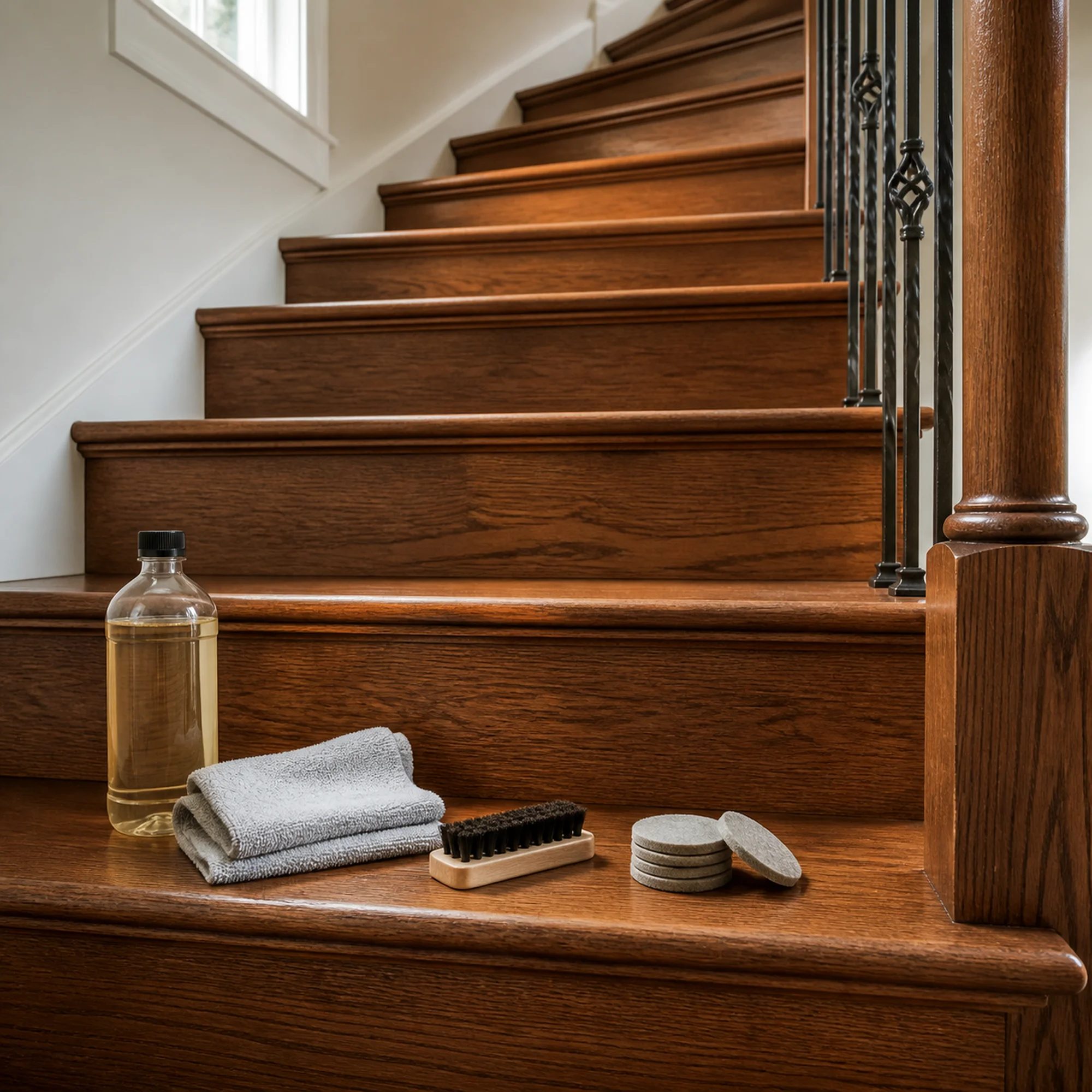
Dust off with a microfiber mop or a soft-brush vacuum cleaner. This is the most important step of all. Sand and dust act as an abrasive under the soles and scratch the lacquer with every pass.
As needed
Wash with a cloth thoroughly wrung out Wood and water are not good friends: moisture that gets into a joint swells the fibre and peels the varnish from underneath, which can cause the wood to become very dry and damaged.
Never
- Steam cleaner — the combined heat and humidity destroy the finish
- Abrasives, scrubbing powders, green pads
- Pure vinegar or ammonia, which tarnishes the varnish
- Nourishing waxes or oils on varnished wood: they create a slippery, dangerous film in a staircase
- Mop with water
Controlling humidity: the real challenge in Quebec
Wood expands and contracts with ambient humidity, and in winter, heating dries out the indoor air and makes wood shrink — hence the crackling that appears in January and disappears in spring.
Aim for a relative humidity level between 35 and 50 per cent A humidifier in winter and a dehumidifier in summer, especially in the basement, will prolong the life of a staircase much more effectively than any maintenance product.
When to redo the finish
Three signs that do not deceive:
- Le nose of treads becomes matte while the rest remains shiny — it’s always there that wear begins
- The surface sticks to the touch, a sign that the varnish has disappeared by enstraight
- Wood stains locally, proof that it is no longer protected
Do not wait until the bare wood is reached. As long as the varnish is simply worn out, a light sandblasting followed by a new coat is enough.Once the wood is deeply stained, the sandblasting must go lower and the operation becomes heavier.
Realistic lifespan
| Component | Lifetime | Determining factor |
|---|---|---|
| Structure and stringers | 40 to 60 years | Humidity, assembly quality |
| treads and hardwood | 30 to 50 years | Wood Species, frequency of passage |
| Finishing (varnish) | 8-15 years | Maintenance, sun exposure |
| handrail | 15-25 years | Hand contact, sweating |
Protecting the weak points
The top and bottom of the stairs One entrance mat inside and one outside significantly reduce abrasion on the entire staircase, and the staircase is also protected against the impact of the stairs.
The walk from the bottom On a very busy staircase, it will visually stand out from the others after a few years.
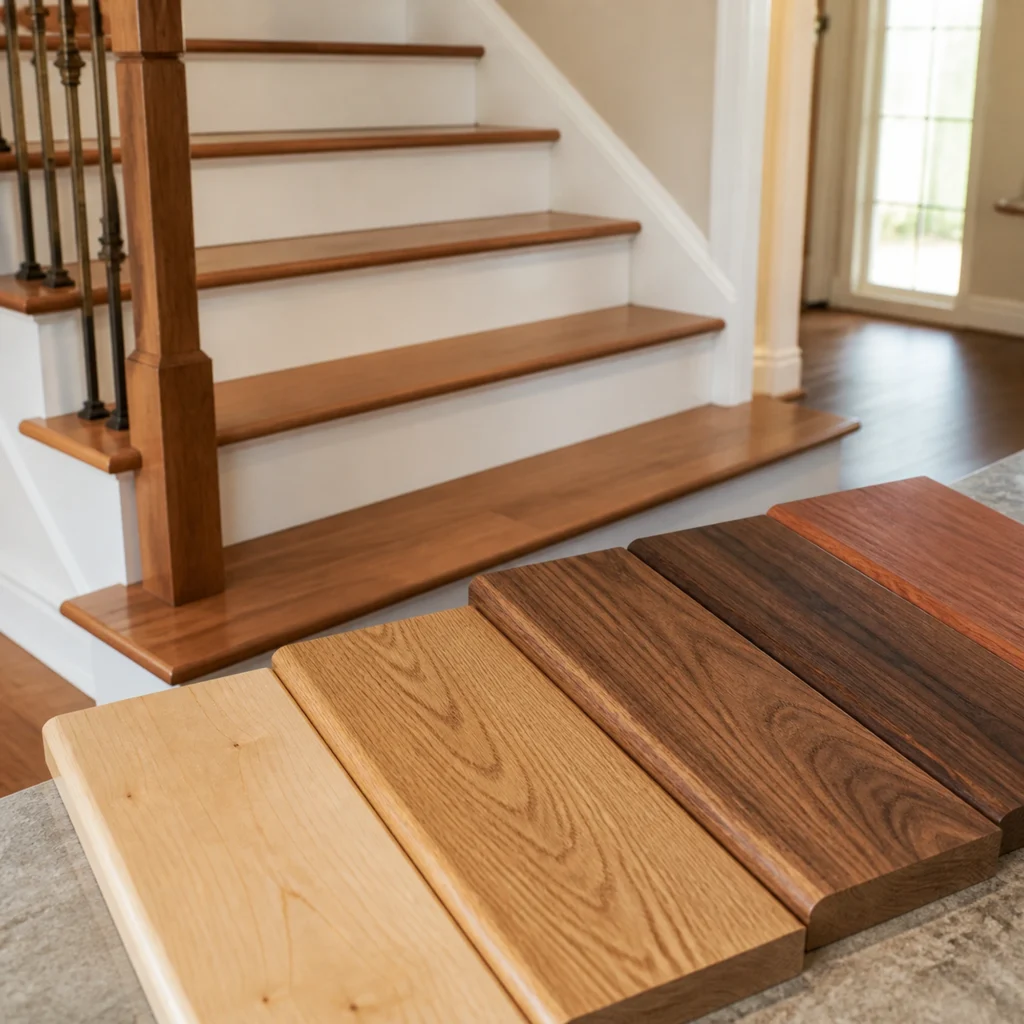
Exposure to the sun. A staircase with a large window will see the wood develop unevenly: maple pales, birch darkens slightly.A curtain or UV film limits the gap between the top and bottom.
Animal claws and heels
No paint will last the claws of a dog going down a staircase indefinitely. Two things help: trim the claws regularly, and choose an open-grained paint that masks the marks — the red oak is significantly more forgiving than the maple. Comparative of hardwoods.
Frequently Asked Questions
How to clean a staircase in hardwood?
Dust off every week with a microfiber mop, then wash as needed with a strongly spinned cloth and pH neutral soap for varnished wood.Avoid abundant water and any abrasive product.
Can a steam cleaner be used on a wooden staircase?
No. The combination of heat and humidity causes the wood fiber to swell and the varnish to peel off, which is one of the most common causes of prematurely damaged finishes.
How often should I re-finish a staircase?
Every 8 to 15 years in normal residential use.The most reliable signal is the nose of the treads which becomes matte while the rest remains glossy.
Why does my staircase crack in winter?
Heating dries the indoor air and causes the wood to shrink, which creates play in the joints, which is greatly reduced by maintaining a humidity level of 35-50%.
How long does a staircase in hardwood last?
40 to 60 years for the structure and 30 to 50 years for the treads, with regular maintenance, only the finishing needs to be redone every 8 to 15 years.
Do I need to wax a wooden staircase?
No, if the wood is varnished, because wax creates a slippery film, which is especially dangerous in a staircase, and makes it difficult to sandblasting when refinishing the finish.
Have the wear of your stairs assessed
A light sandblasting with a new finish is enough in many cases, and costs a fraction of a new staircase, but it still needs to be done before the bare wood gets stained.
Check out our guide New or refurbished staircase, page renovation of stairs, or Contact us.