Custom-Machined Profiles
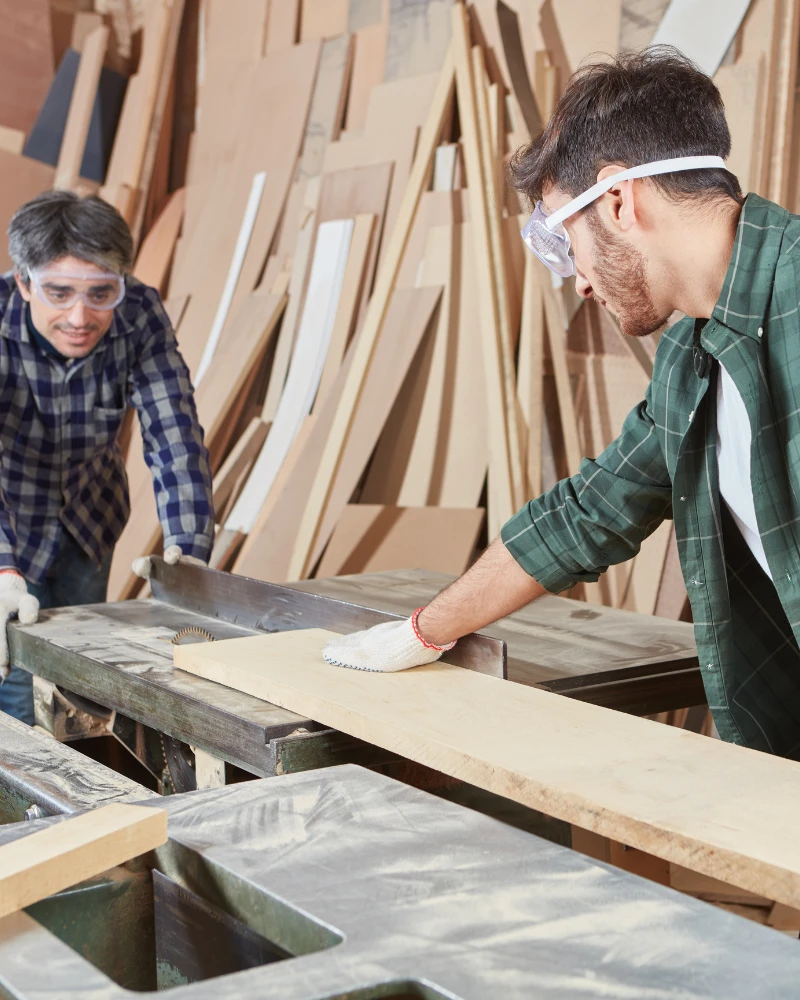
Stair nosings and mouldings are cut in our workshop to the selected profile. Nothing comes from a catalogue of standard parts.
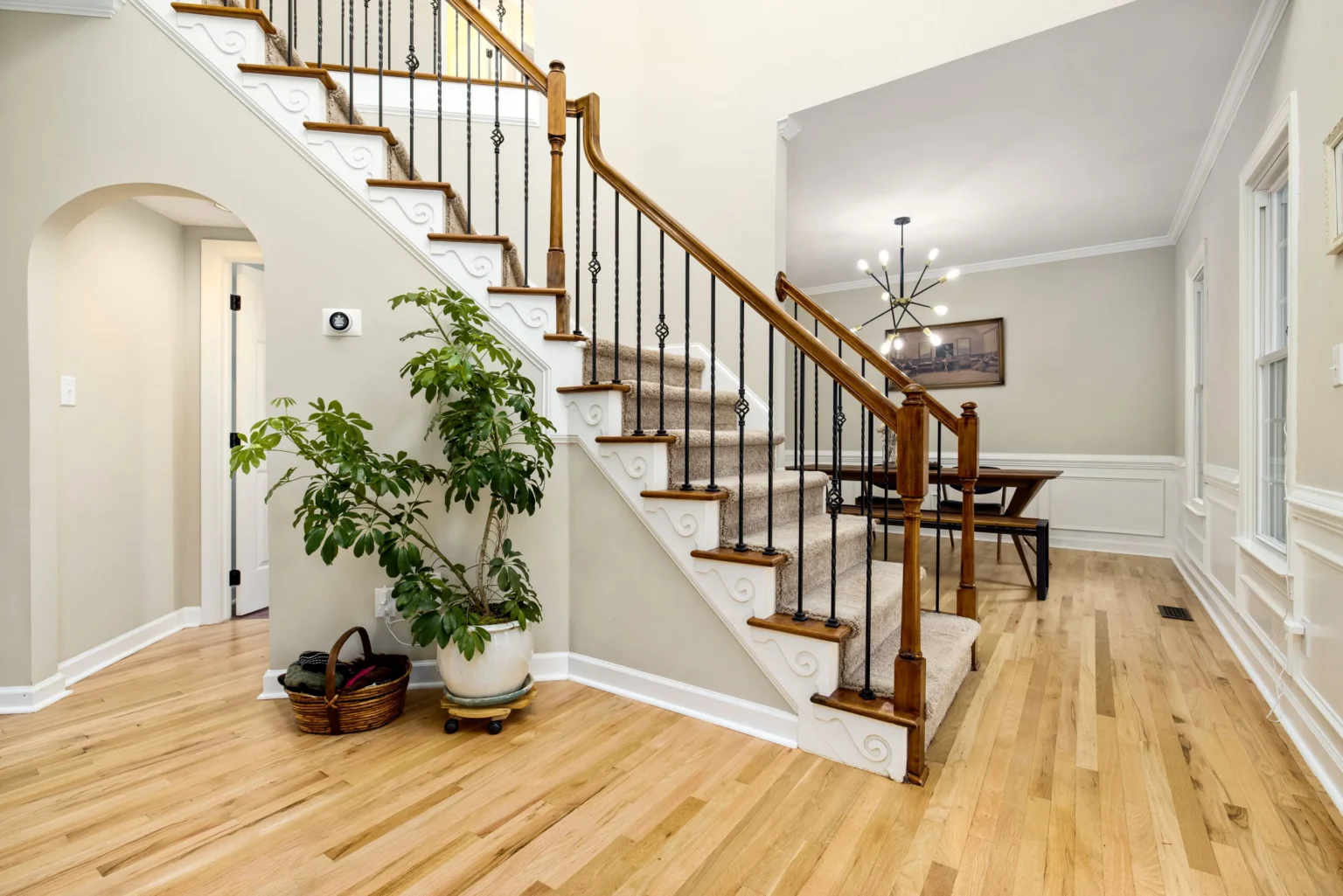
The wooden classic staircase is recognizable by its turned balusters, its worked poles and its curved handrail: it brings the warmth of traditional know-how.
Measurement, Manufacturing, Installation and Finishing — Everything Is Included
« The team took the measurements themselves, delivered exactly on schedule and the installation was flawless. No surprises. »
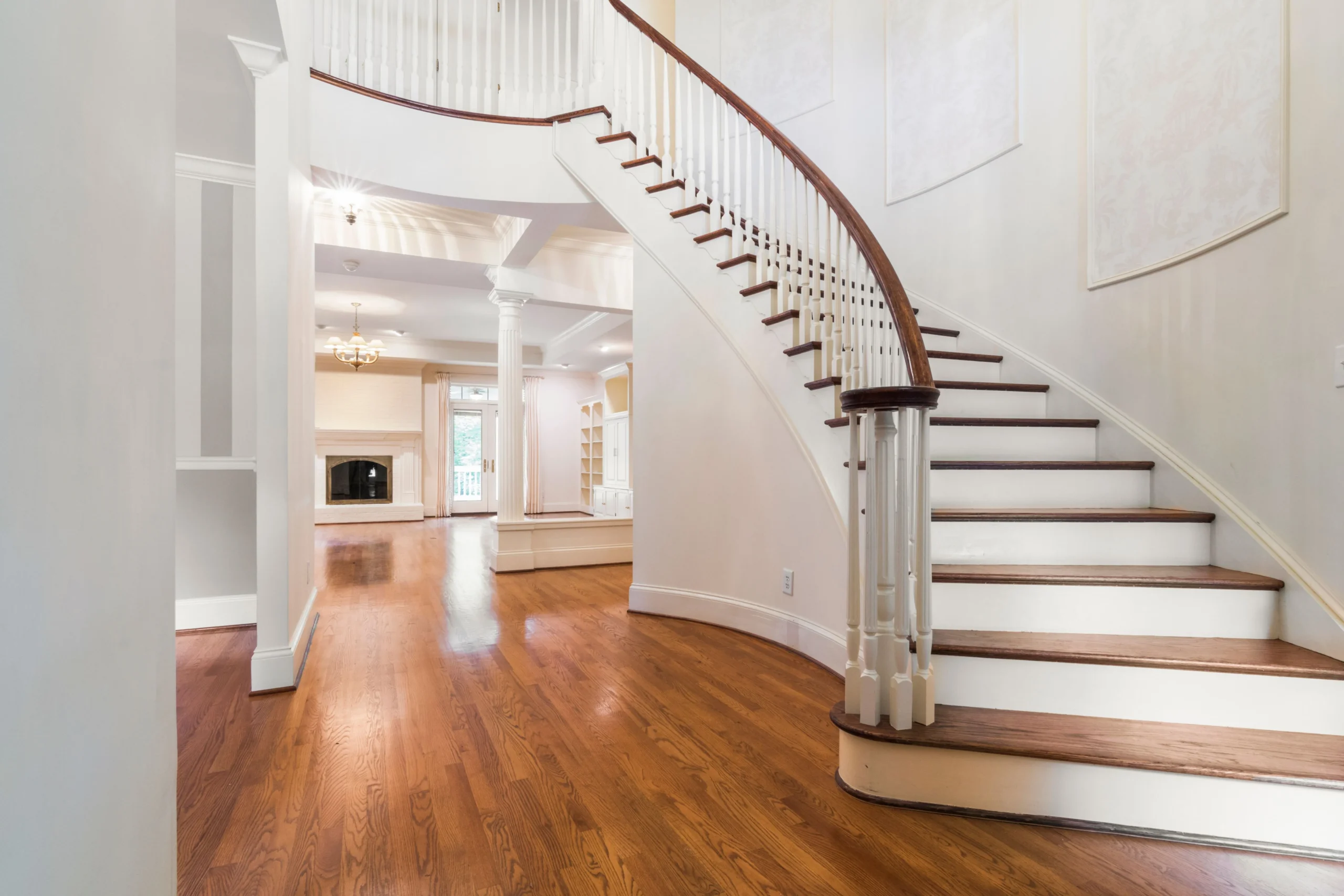
A classic staircase is read by a few constant traits: solid risers that close each step, a stair nosing moulded rather than straight, balusters close together, and a starting post stronger than the rest of the railing.The whole is massive, assumed, and it visually occupies the room.
The ornament comes after. What really dates a staircase is the ratio between the height of the railing, the width of the flight and the cross section of the balusters. Right proportions hold with plain balusters; wrong proportions are not made up by adding moldings on top. This is the first thing we stop at the survey, before talking about shade or profile.
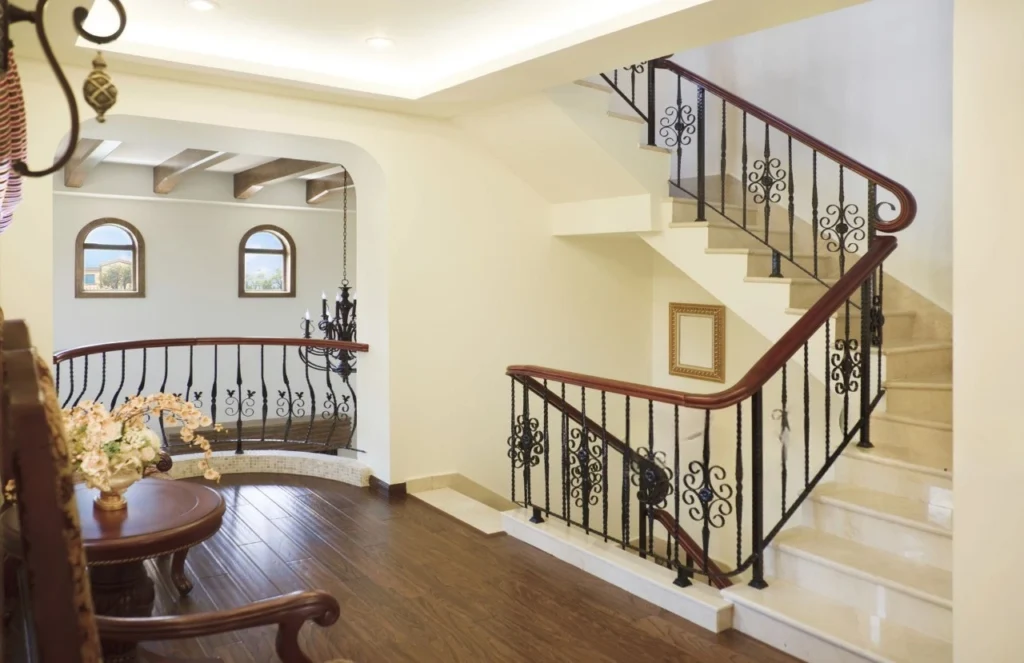
It is the most visible part of the staircase, and the one that receives the most effort: all the lateral push of the railing ends up there.On an classic staircase, it is assembled in the structure and not placed on the first step, which changes its appearance as well as its appearance.
The balusters follows, turned to give the traditional vocabulary; square or flat, they calm the whole without modernizing it. Their number is not a choice of style: it derives from the maximum aperture allowed between two balusters, exactly as on a contemporary railing.
The shade does the rest: dark wood accentuates the mass, light wood lightens it, with a strictly identical pattern. On a dimly lit cage, the gap between the two widens even more, which is worth trying on site rather than on a hand-held sample.
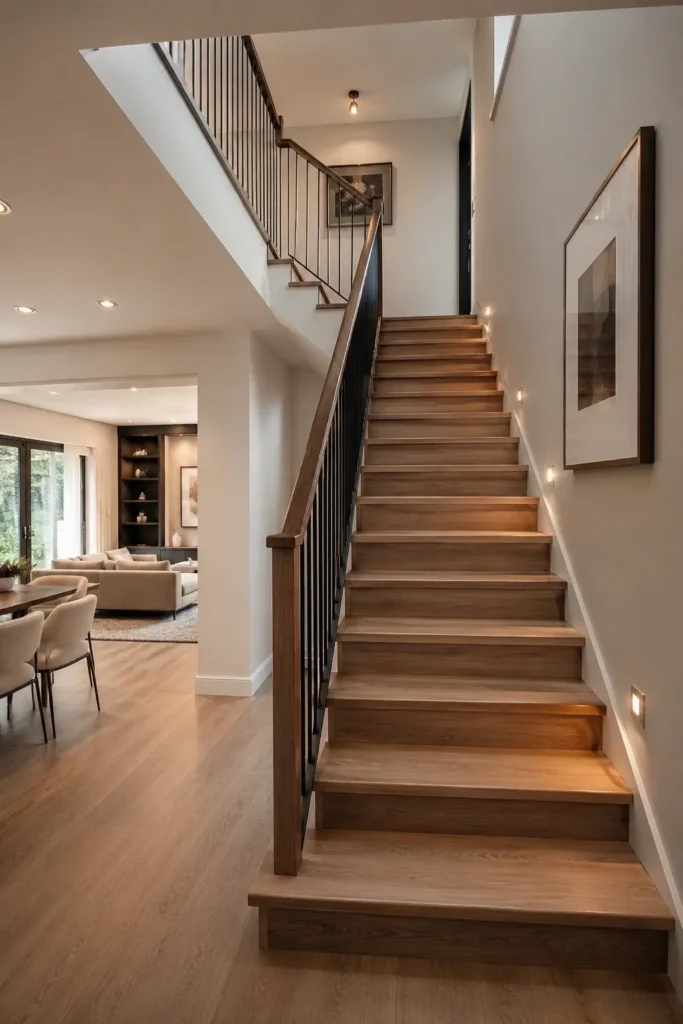
The stair-nosing profile, handrail shape and railing infill create most of the visual effect. Everything else follows these three choices.
Stair nosings and mouldings are cut in our workshop to the selected profile. Nothing comes from a catalogue of standard parts.
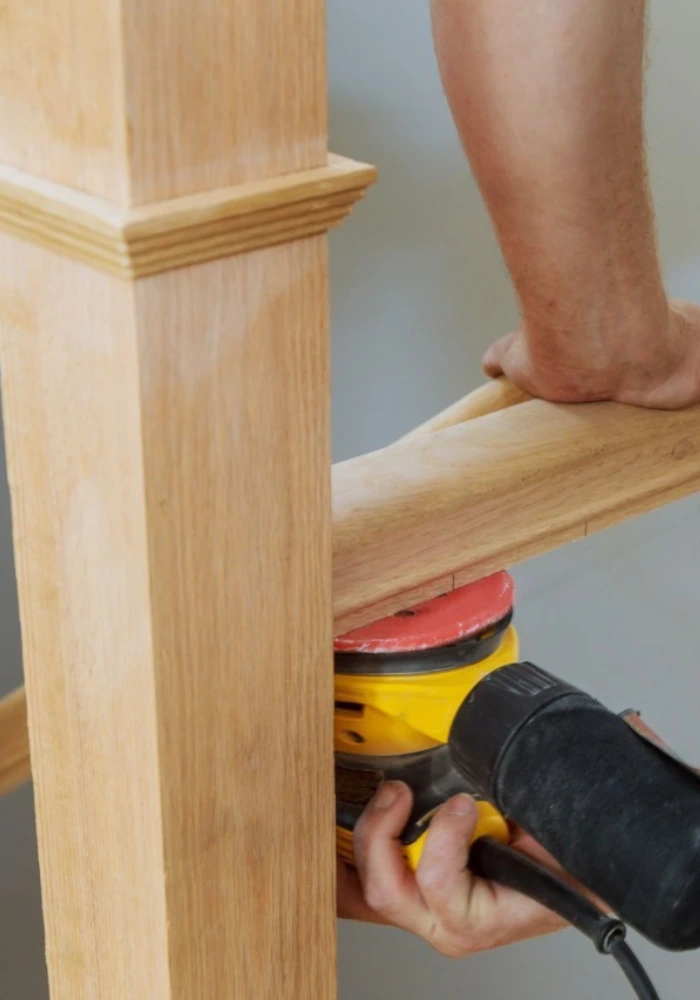
The stain is tested on an offcut from the same piece of wood. The result depends as much on the grain as on the product.
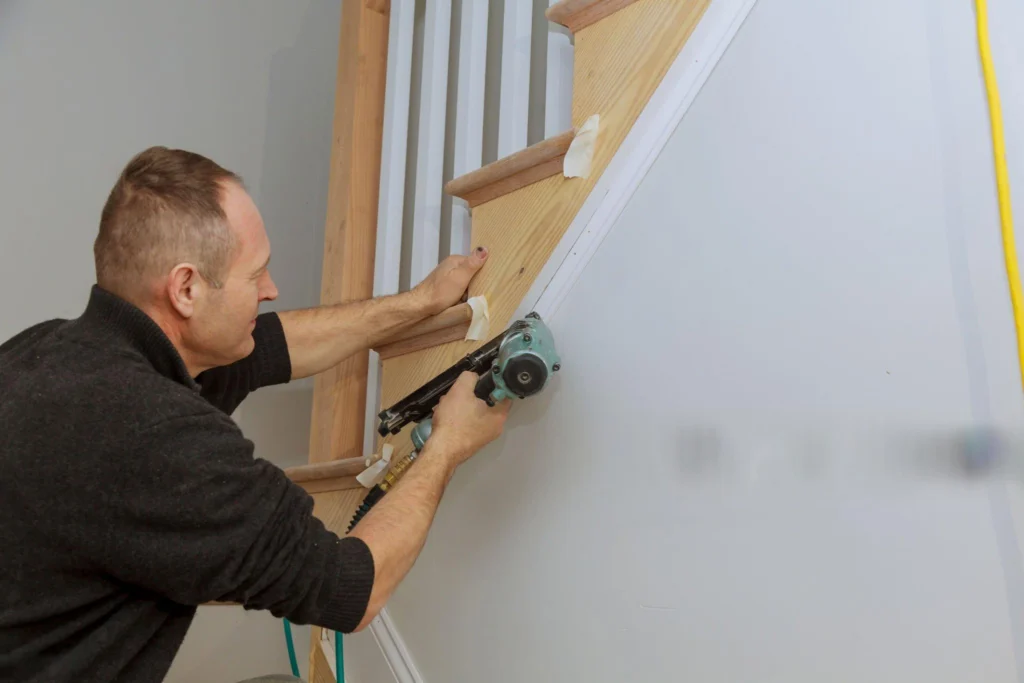
The building code sets the maximum spacing between balusters. That spacing determines their number, not the drawing.
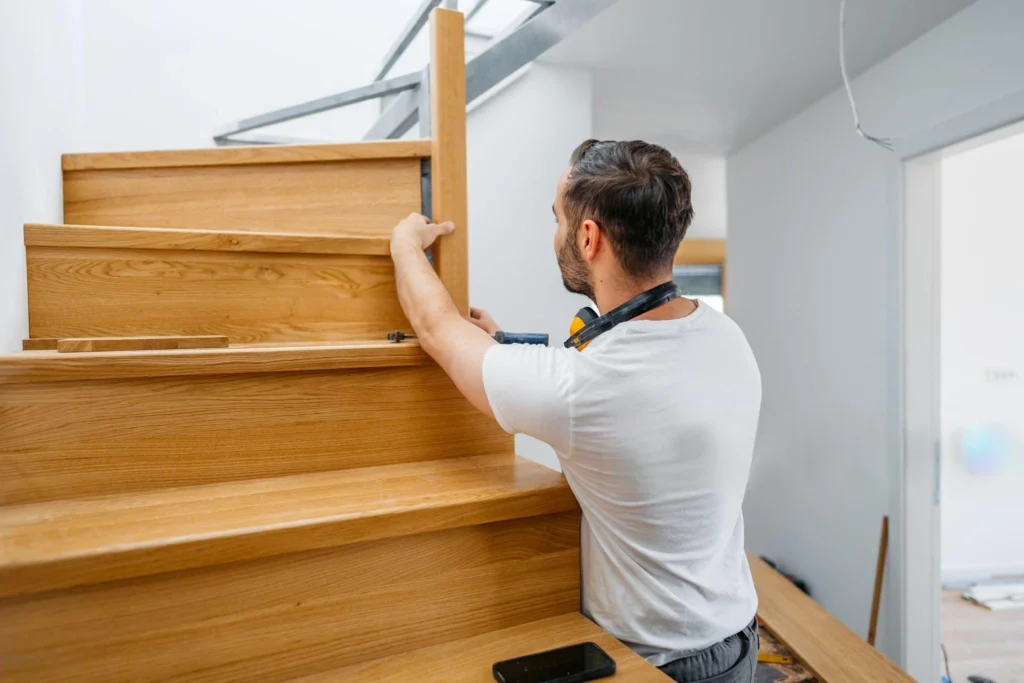
Conditions no drawing can predict are resolved during installation at the actual stair opening.
The style carries through to the railing: explore our railings, or all of our staircase types.
No. The shade is the easiest parameter to change without touching the design. A classic staircase in light oak remains classic with its risers, moldings and starting post. The dark simply accentuates the mass and visually closes the cage, which plays a lot in a narrow hall. stairs in oak.
Technically yes, but the result rarely reads as a whole. The glass suppresses the rhythm of the balusters, which is precisely what carries the classic character of the fly. When the objective is to lighten, a thinner baluster, or a slightly tighter spacing, gives a better result than a glass panel reported on a traditional design. modern staircases.
Yes, because everyone goes through the turn and their number is fixed by the allowed opening, not by the budget. On a long run, the difference with square balusters becomes noticeable, especially since the turning is done piece by piece and the slightest defect in series is seen once the balusters are aligned. railing and wrought iron, which offer another decorative way.
Often yes. Adding risers, replacing the railing and taking the starting post back is enough to completely change the reading of a flight, without touching the stringers or the route. This is one of the returns where the ratio between the cost and the effect obtained is the most favorable. renovation of stairs.
A satin finish rather than a high-gloss finish: it leaves less footprints and ages better on mouldings, where the gloss highlights the slightest sanding defect. We apply it in the workshop, before installation, including hidden faces, so that the mouldings are sealed into their hollows rather than just on the surface.
Discover also all our staircase types, but Railings and Handrails and nos Projects, or request a quote.