Site Measurement Before Design
Measurements are taken in your home at the actual stair opening. The possible layout follows from them, never the other way around.
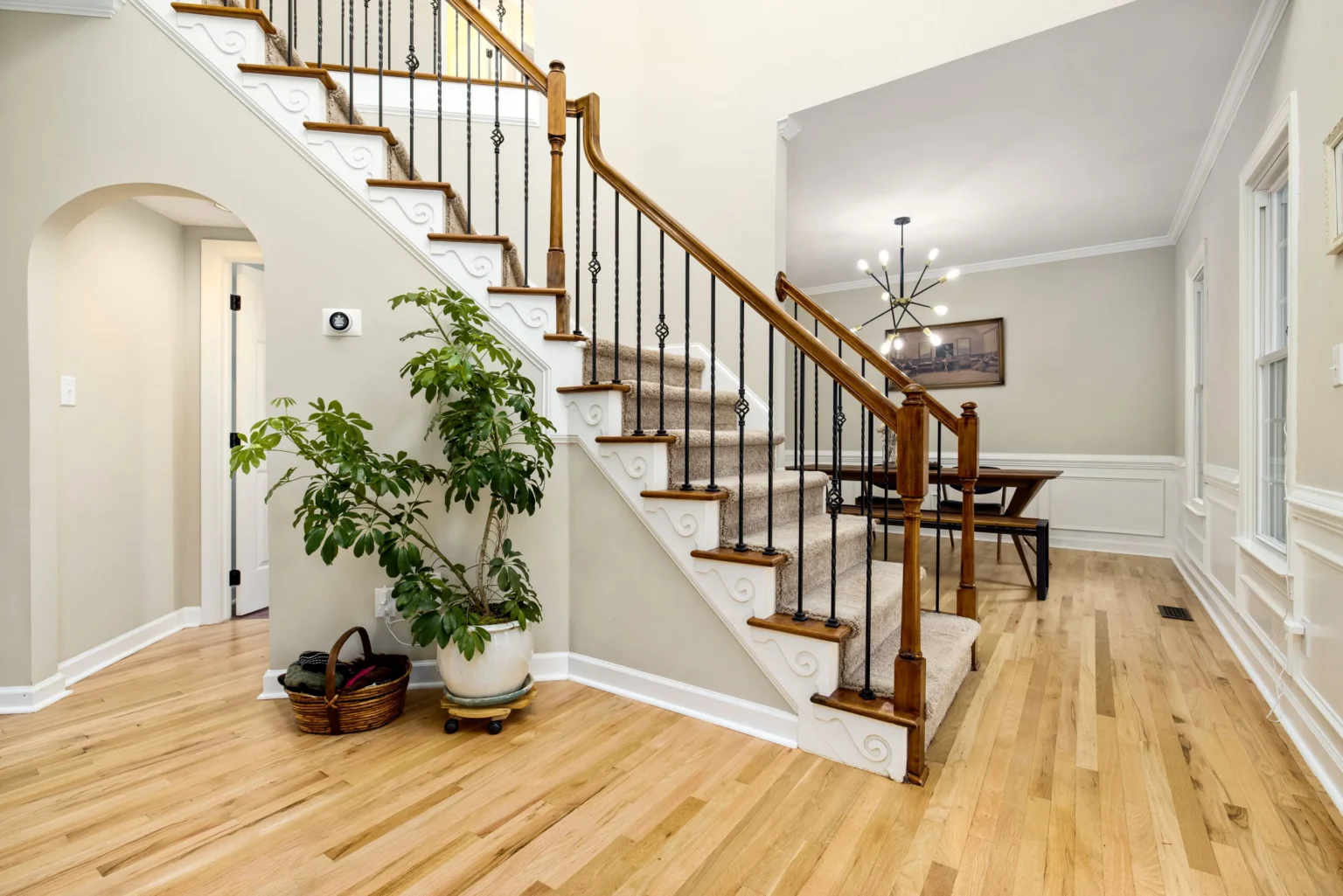
The winder staircase is the most common type of staircase in Quebec homes: it changes direction as it climbs to fit the shape of the room and free up floor space.
Measurement, Manufacturing, Installation and Finishing — Everything Is Included
« The team took the measurements themselves, delivered exactly on schedule and the installation was flawless. No surprises. »
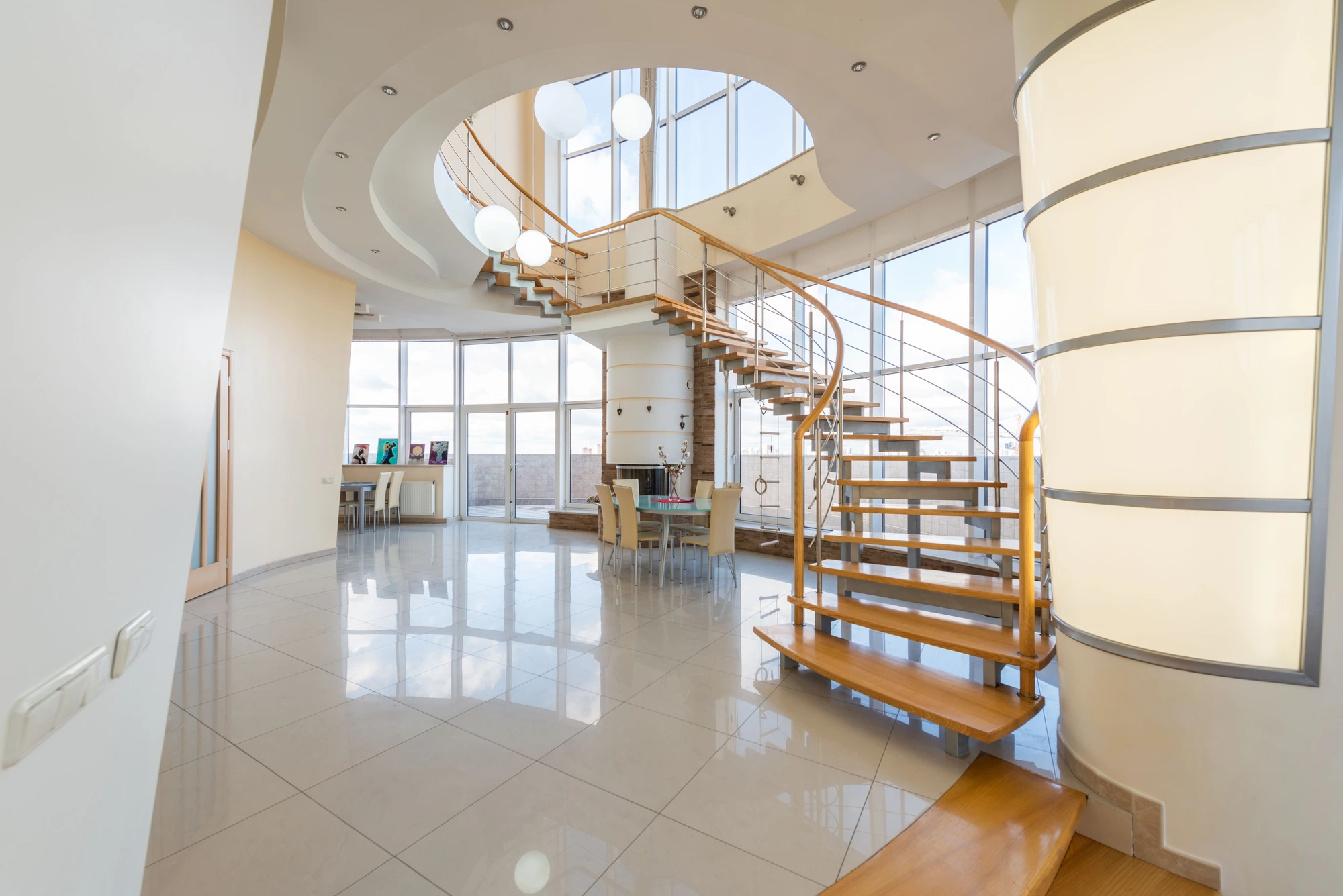
A winder staircase changes direction as it climbs, and the turn is taken either on a landing or on a treads swinging angle, with the tread depth varying from one end of the step to the other. This is the most common layout in residential areas, because it folds the flight instead of stretching it.
The gain is a matter of space. At the same height, a turning track occupies less ground length than a straight track, since the climb continues inside the turn.In return, the manufacturing is complicated: stringers bent or assembled, treads corner cut one by one, handrail connected in a curve.
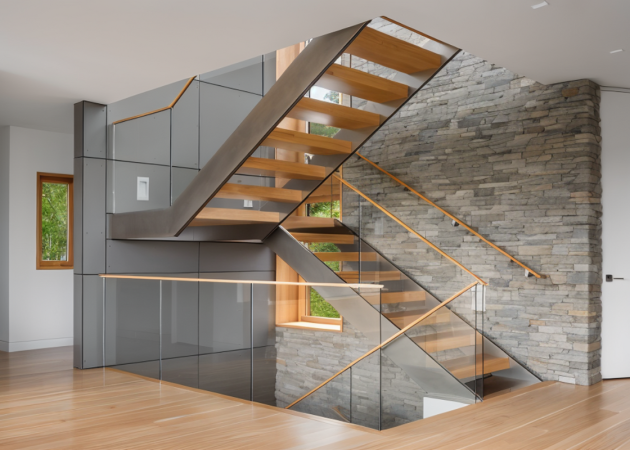
The swinging treads turn the fly without ever interrupting it. Their tread depth widens to the outside of the turn and narrows to the core, which implies a swing path calculated before the flow.If it is not distributed properly, it results in uncomfortable treads on the inside, where the foot has the least space.
The landing, on the other hand, cuts the climb in two parts, simplifies the manufacturing process, offers a rest at the middle of the way and is more tolerant of measurement errors. It, on the other hand, consumes the surface of a whole step, sometimes two, and thus lengthens the footprint of the whole.
The choice is made by the measurement, depending on the opening of the stairwell opening and the clearance available at the start and at the end.This is also the moment when we check the clearance under the stairwell opening, which quickly reduces in a turn.
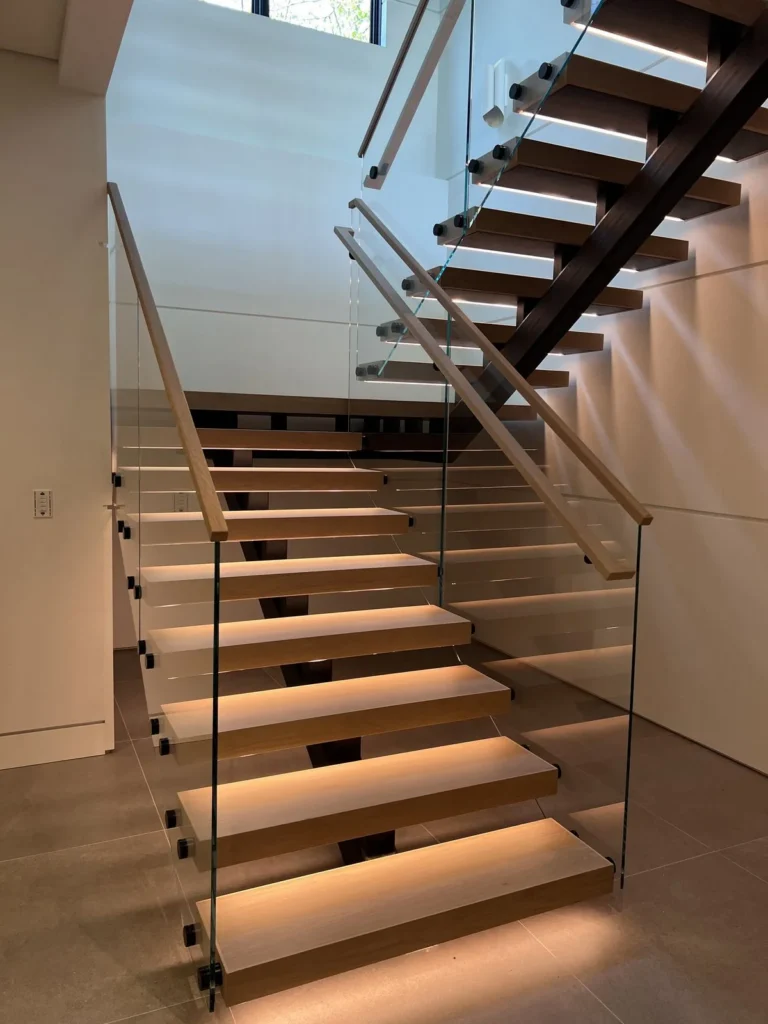
The floor-to-floor height, stairwell opening and available floor clearance determine the layout far more than personal taste. We record these three measurements before proposing any option.
Measurements are taken in your home at the actual stair opening. The possible layout follows from them, never the other way around.
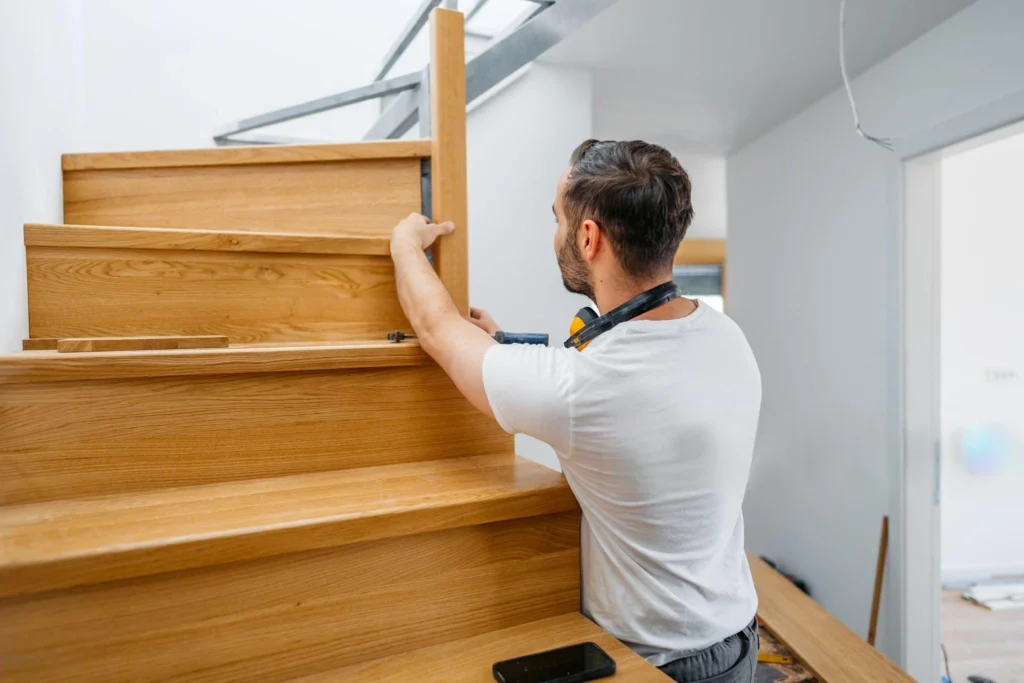
Riser height and tread depth are governed by the Quebec Construction Code. The number of treads is not negotiable.

Treads and stringers are sealed before installation, including hidden faces. A job site is not a finishing workshop.

The same team measures the opening, builds the staircase and installs it. No subcontractor steps in between the drawing and the final screw.
Every layout has its own clearance requirements: explore all our staircase types, or our projects to compare them in real stair openings.
The quarter turn changes direction by a quarter of a turn, the half turn by one hundred and eighty degrees and returns parallel to itself. In addition, we specify where the turn is located: a low quarter turn if it is near the start, a high one if it is near the finish. straight staircases.
Less length to the floor, yes, at equal height. But it requires a stairwell opening that follows the curve, which is not always the case in an existing opening. The gain is therefore measured at the floor and ceiling at the same time, never on the floor plane alone. On a rectangular stairwell opening, a half turn with landing often fits better than a quarter turn with treads swinging.
Not if the swing is well distributed. The tread depth is measured on the line of stride, at a distance from the core, and it is this value that must remain constant from one step to the next. renovation of stairs.
Yes, the Central Stringer is then bent in steel, following the curve, and the treads corners are used as cantilevered. The installation is more demanding than in straight, because each step has a different reach. modern staircases.
Same hardwoods as for straight layout, but corner treadss have to be cut in wider rooms, which limits the species available in wide width. Walnut and ash are less easily found in wide width than oak or maple. We check this before stopping the wood, not after. stairs in hardwood.
Discover also all our staircase types, but Railings and Handrails and nos Projects, or request a quote.